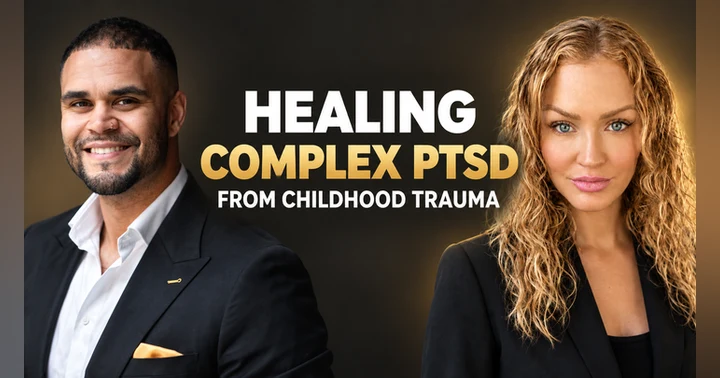
Healing Complex PTSD From Childhood Trauma | Carrie Davidson
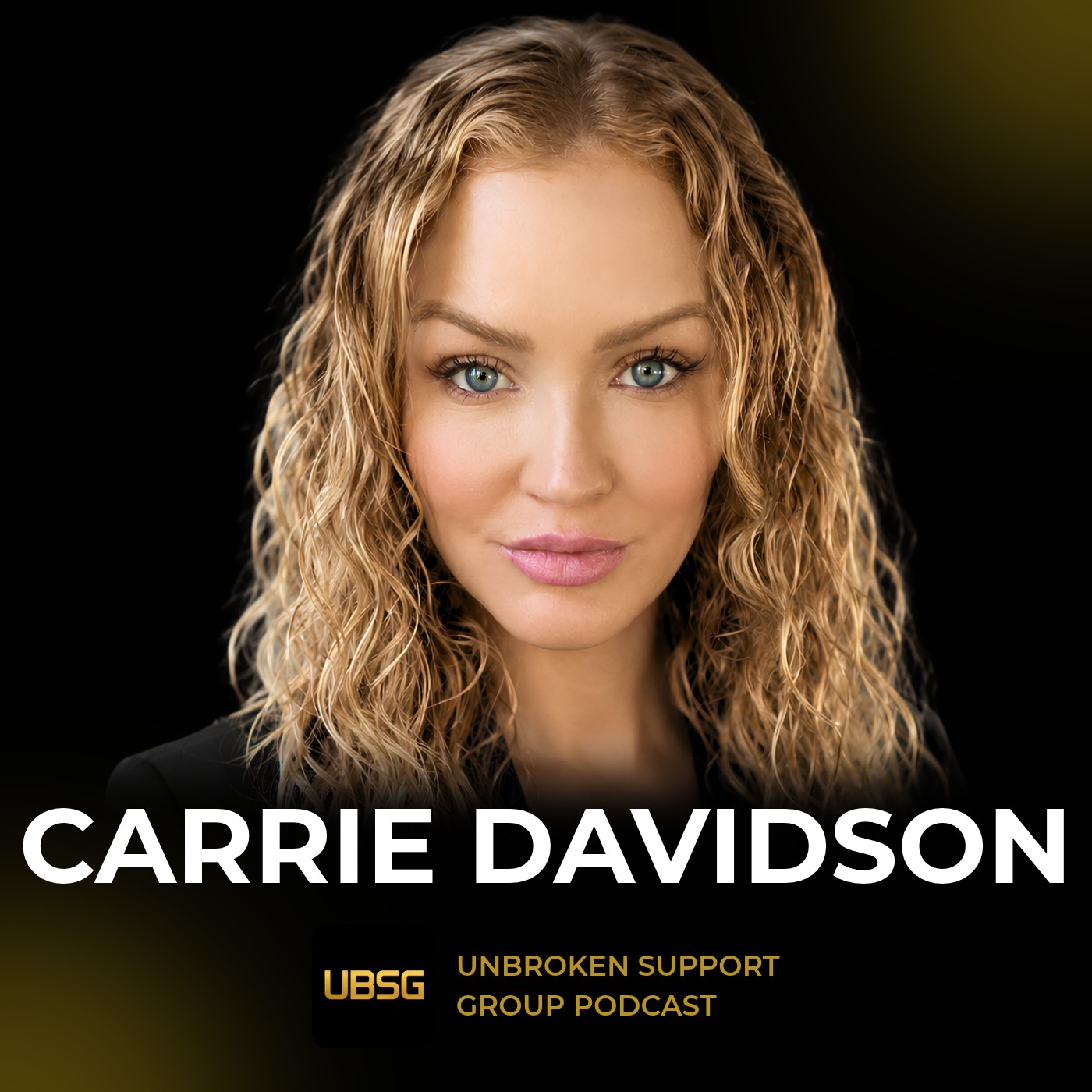
Why do you keep making the same choices even when you know better? In this episode, Michael Unbroken sits down with Carrie Davidson, a registered nurse, trauma coach... (See show notes below)

 Apple Podcasts
 Spotify
 YouTube
 Overcast
 Castro
 RSS Feed
 Amazon Music
 Goodpods
 Why do you keep making the same choices even when you know better? In this episode, Michael Unbroken sits down with Carrie Davidson, a registered nurse, trauma coach, and author, to talk about complex PTSD (CPTSD), childhood trauma, and why so many survivors stay stuck in the same patterns.
Carrie grew up with an alcoholic parent in a home where nothing was predictable. As a kid and young adult she was diagnosed with ADHD, depression, anxiety, and PTSD, and none of those labels got to the root of what she was going through. Things finally made sense when she learned about complex PTSD and the inner critic. Her big shift was a new way of seeing herself: "I am not broken, but I'm patterned, and patterns can change."
In this episode, you'll learn:
- Why trauma survivors get "subconsciously addicted" to behavior that feels safe and familiar
- How diagnoses and labels can miss the root cause of trauma
- Adverse Childhood Experiences (ACEs) and how they shape adult behavior
- Why you can't think your way out of trauma, and why healing also has to happen in the body and nervous system
- Being "high functioning" while struggling with substance use
- Performative healing vs. real change
- Letting go of the identity you built just to survive
- Why healing can't happen alone and needs community
ABOUT CARRIE DAVIDSON:
Carrie Davidson is an author, registered nurse, and trauma recovery coach who spent decades in destructive patterns before learning in her mid-thirties that she was living with complex PTSD. Coming to her work from inside the wound rather than a textbook, she writes and speaks about the difference between what was done to her and what was passed down, what addiction was really trying to do for her, and what changed when she stopped performing recovery and started living it. Her memoir, Addicted to Trauma: A Memoir of CPTSD, Addiction, and the Patterns That Almost Killed Me, arrives in Summer 2026. She splits her time between Durham, North Carolina, and San Pedro, Belize, and can be found at carriepdavidson.com.
Connect with Carrie Davidson:
- Website: https://carriepdavidson.com/
- Instagram: @carriepdavidson
- TikTok: @carriepdavidson
- Facebook: https://www.facebook.com/cpdavidson1
- Podcast: https://podmatch.com/guestdetailpreview/178045952435507297817a5a1
- Linkedin: https://www.linkedin.com/in/carriepdavidson/
Subscribe for more conversations about childhood trauma, entrepreneurship, healing, mental health, personal growth, and becoming the best version of yourself.
Advertising Inquiries: https://redcircle.com/brands
Privacy & Opt-Out: https://redcircle.com/privacy
Support the Podcast: Become a listed sponsor!
Follow me on Instagram @MichaelUnbroken
Learn more about coaching at https://coaching.thinkunbroken.com
Get your FREE copy of my #1 Best-Selling Book Think Unbroken: https://book.thinkunbroken.com/
Advertising Inquiries: https://redcircle.com/brands
Privacy & Opt-Out: https://redcircle.com/privacy

Support the Podcast: Become a listed sponsor!
Follow me on Instagram @MichaelUnbroken
Learn more about coaching at https://coaching.thinkunbroken.com
Get your FREE copy of my #1 Best-Selling Book Think Unbroken: https://book.thinkunbroken.com/
Michael: So much of our life, our stories and our journeys are really tied to the decisions that we make as individuals to go in a different path, to go in a different direction, to choose what it is that we want our lives to be. No matter what we come from, through the trauma, through abuse, through loss, we get to decide. That decision process sometimes can be incredibly difficult and harrowing, and it requires you becoming a new version of yourself that you didn't even know that you were capable of. I know certainly I've spoken about that in my own journey, as well as many of the guests on the shows over the years. But what do you do when you feel that deeper calling to serve at the highest level, to really change the world, and you have that thing inside of you that demands more, not only for yourself, but for the mark that you want to leave on this thing that we call life? Well, that's what we're gonna get in today with my great friend and guest, Carrie Davidson. My friend, welcome to the show.
Carrie: Thanks so much. I'm glad to be here.
Michael: For those who are listening to us, why should they spend their time with us today?
Carrie: Yeah, so I think that they should spend our time with us today because I think a lot of people that come from a background that is one marked by trauma, especially childhood trauma, we can get stuck in patterns that prevent us from living a life that we can claim as ours. And I have been through a lot for someone my age. I always say I've had nine lives, and I have a pretty unique perspective. I am a registered nurse, and I've also had my own journey of trauma as well. And I have been to some pretty dark places and really come out the other side. So I feel like I have the perspective to be able to give to people who are still stuck in this loop of not really knowing how to move forward with their life.
Michael: I think a lot of people get stuck in that loop. I certainly did. I go look at my entire twenties. I was like, holy shit, I am just stuck. And stuck's a great word to use also, because I think that's really a way that a lot of people define where they are in their journey. I know that was certainly true for me for a long time. I kept just being like, man, I feel like I'm back against the wall, can't move, nothing's changing, nothing's shifting. And I think that that can feel really scary for people. But it also requires you making a shift really to become who you are. So I'm curious, when you think about stock, what does that look like in your own journey, and what do you see that in other people?
Carrie: For me, it is, I have the awareness of what I need to be doing to change my life, but I'm still making the same decision even though I know better. So that shows up for me in different habits. It has showed up previously in my life, especially in my 20s, with substance abuse. I would know what would happen if I went out and numbed my problems with alcohol or drugs. And even though I would know the consequences of that, I would still do it. And so I was stuck, like you're saying, with my back against the wall and beating my head up against a wall. Like, why is nothing changing? And I realized that I would start new habits, but they wouldn't really last that long. And I would revert back to my old ways. And it was just, what I came to really realize was that I was subconsciously addicted to these unhealthy behaviors that weren't serving me, but it was my safety zone. Toxicity in relationships was familiar to me. And so that was what I kept going back to, was what felt safe and familiar, even though I knew it wasn't serving me anymore.
Michael: Yeah, I think I see that in a lot of people. I've seen that in myself over the years. Even, what, sixteen years into my own journey, I still catch myself in these moments of being like, dude, what the fuck are you doing? Let's go. And there's something really interesting I've been playing with over the course of probably last three or four years. And it was a big part of what I was doing in coaching before I pivoted out of that world. And it was, what would future me think right now? And I kept just putting this hat on of being, okay, you're 88, you're on your deathbed. Whose life did you live? And I think that for me became this really interesting anchor. When I think about the journey though, so many people that I think about as they get trapped into these moments, right? And then doctors, therapists, whatever, they label us, and you're in this constant journey of being like, well, what the fuck is wrong with me? Right. I don't know about you, but for me, when it was like I finally understood, there was a lot of freedom in that. So what was the journey like for you getting to that place of recognizing, bringing awareness, understanding the journey at a little bit of a deeper level?
Carrie: Yeah, to your point, I have had tons of diagnoses thrown at me by therapists, psychiatrists my whole life. My background, so I come from a childhood with an alcoholic parent where things were very unpredictable. And so I started acting out for attention because I wasn't getting my needs met as a child. So even as young as 12 years old, I was already put on medication, and I was getting a diagnosis that fit my behavior, but wasn't actually getting to the root of what was going on for me, which was that I was in a very unstable environment as a child. And I think I tried to identify, as time progressed, with the diagnoses that I was getting. ADHD I got diagnosed with in middle school, I got put on medication, then high school was depression, anxiety, later in my 20s, PTSD. So all of these diagnoses, I felt like, oh yeah, that fits. But it didn't really actually get to the root of what I was experiencing until I had a major trauma happen about 10 years ago, and I started learning about what complex PTSD was. And then I read a book several years ago about complex PTSD, and I was like, holy shit, this book is literally describing my life, describing the inner critic, the outer critic. Just the way that I viewed the world, honestly, finally made sense for the first time. And it really opened my eyes to how much trauma really is the root of so many of these other mental health issues. But it's just not very well known. It's not even in the diagnostic manual yet. People aren't even willing to go back and say, what happened in childhood that might have made you pick up that first drink or snort that first line, whatever it is? People are trying to escape and find themselves at the end of the day. And I think that labels can be tricky. Especially as my role as a nurse, diagnosing someone has benefit, right? It helps us know what medication to give them, for example, but I just think there's a lot more gray area when it comes to treating mental health and understanding trauma.
Michael: Yeah, I agree. And I think about, I was on YouTube when I was twenty-nine, probably. And back then, YouTube was not anything like it is now. And there was this old video by Dr. Falletti, who coined Ace, right? And the adverse childhood experiences. And I'm a fucking grown man, and I'm sitting here watching this video, and for the first time in my life, I was like, that's why I'm fucking insane. Because I used to have these moments, and I don't know if you relate to this or not. I used to have these moments and I'd be like, this is what crazy people do. From the outside looking in, I would look at this and I'd go, this is crazy people stuff. And then I'm looking in the mirror and I'm like, wait, I'm crazy people. What are you doing, man? You're drinking and driving. You're hooking up with strangers. You're putting yourself in precarious financial positions. You're partying way too hard. I'm the kind of guy at the party that have a fifth of rum or whiskey in the back of my pocket. I would drink the whole thing in a night, wake up on the stairs, couldn't make it to bed. And just, what are you doing? And you think about the beginning, the origins of that, being a little kid, coming from also a home of alcoholics. Most of my family are alcoholics. A lot of them are in recovery now, which is amazing. But it's been that thing that has just touched, it's probably because I'm biracial and it's that half hillbilly thing. I don't know. We won't have to get in that right now. But my point is, we go through that, and I'm sitting here and I'm like, I remember distinctly the first time I had a beer at eight years old. And my grandma thought it was funny because she was a fucking hillbilly. Honestly, I'm just calling it what it is. And so I'm reflecting on these moments as I'm watching this thing from Buffaletti talking about, did your parents have a divorce? Was anyone in the household arrested? Was there sexual abuse in the home? All of these things that you go through. And it was like, yes, yes, yes, yes, yes, yes, yes, yes, yes, yes. Ultimately answering yes to all 10 of these questions and sitting in that, and for the first time, you're talking about tens of thousands of dollars in therapy, trying all the stupid medications that never worked, church, Bible, shit that didn't serve me at all. And then landing in this place and going, now I have something to support the crazy. What was it like for you when you had this self-discovery reading this book? And now you're like, shit, this makes sense. What was that experience, and then being in that frame, like for you?
Carrie: Yeah, no, I definitely relate to a lot of that. And I've definitely felt different than other people in my family for most of my life. And even growing up, I was more emotional than my sister, for example. And so my mom would be like, well, what's wrong with you? Why are you having such a strong reaction to this stuff? And then I would get in relationships in high school with just shitty people. And I would basically try to find my self-worth in those relationships. And then when they were out doing whatever they're doing, I would then have some kind of response that would be crazy. People would be like, she's crazy. And so I literally was just labeled as crazy when it was really just me trying to get my needs met. And I think when I was reading that book, especially the inner critic that I brought up, I realized that my identity was built around this inner critic. I was so mean to myself, and my self narrative was just, you're stupid. What's wrong with you? You're psycho. And I would literally just, things I would say to myself that I wouldn't say to my worst enemy. Well, maybe my worst enemy, but definitely not a friend. Definitely not someone that I wanted to spend time with. And so the wake up call and the pivotal moment for me was realizing that I had labeled myself as this broken person. And I basically decided that you can't fix broken. And the shift for me was hitting one of my rock bottoms. I've had many, but realizing I just shift the narrative to, I am not broken, but I'm patterned, and patterns can change. I held on to the belief that people couldn't change. People were who they were and that they couldn't change, which now I have a different perspective on, but I at least was able to get to the point, like, okay, I can change a pattern. And so that allowed me to at least feel some hope that I wasn't just doomed for a life that didn't feel like mine.
Michael: Well, what's crazy is sometimes you need that. It's almost like a mirror, is how I've looked at it over the years, where you have something to support the pattern, right? I tell this to my team all the time. And I tell this to the clients that we work with, and all the things that we do, whether we're on the entrepreneur side with Unbroken Business Support Group or Think Unbroken, whatever it is. I'm like, show me your calendar and I'll show you your life. And I think that, and this is not to come off as necessarily preachy, but I've just experienced it in my own life. You show me somebody's calendar full of empty spaces who isn't doing the work, and I will find all of the chaos of their life to follow. And there's something about, I mentioned this idea of pulling yourself into the future. There's something about sitting and looking at the real reality of the moment that you're in and going, okay, if I look back on this moment 10 years from now, how am I gonna feel about it? And I think that a lot of times people are so trapped in the fucking past, right? That's the handcuffs, that's your back against the wall. They forget that, and they're staring at this locked door in front of them, and they forget that the door isn't actually locked. You just have to turn the handle. And I've discovered in my own life over the years, if I allow myself to leverage the excuses, which are reasonable, by the way, I end up smoking and drinking and hooking up with strangers and ruining businesses and friendships and relationships. And I'm like, how many times are you gonna ruin your own life? Right. And you talked about having multiple rock bottoms. Yo, I'm there. I've been there. I've touched the bottom. And the plus side of the bottom is, well, nowhere else to go from there but up. So fuck it. And I think that it's a really important thing to deal with. But one of the really hard things is navigating this transition, because I think a lot of people, they become high functioning, they become overachievers, they become so dysregulated in their nervous system that they're going a hundred miles an hour. You show me some of the most successful entrepreneurs in the world, I'm like, I can definitely show you the trauma in their life. How do you get to that place of, sure, we have the logical side of this conversation, right? We have the analytical side. Your brain goes, I have data, I understand the data, I can create some kind of transition through this check. Well, what do you do with the physiology? What do you do with the physical side of that, the embodiment of it, the entire somatic experience? How do you handle that part of it? Because I've come to find that it's not only the mindset, the physical awakening is also a requirement in the healing.
Carrie: Totally, absolutely. Yeah, I definitely identify with that. And it took me a very long time, I think, to come to the realization that the reason that I wasn't really seeing progress in my life was because I had been really high functioning. For example, college was partying, using substances, and I was still getting really good grades. Didn't have to try that hard. And then I went back to school, nursing school, and I was still trying to do the same thing and realizing, well, yeah, I can get away with some of this, but I still feel like shit about myself because my values had evolve without me realizing that they had. And so I was just, yeah, knew what to do, everything. But I think for me, I have had situations in my life that have made me have to disassociate from my body, and that includes even starting when I was six years old with my sister. The book that I just wrote, the first chapter opens with talking about a huge thunderstorm happening. And I was six and my sister was four, and my dad was so drunk he was passed out upstairs, and we tried to wake him up and couldn't wake him up. And it was a moment for me that I realized, well, I can leave my body and not experience this, that dissociation. And then that happened. I was sexually assaulted when I was 14 and didn't realize that it was a sexual assault until I was sitting in a therapist's office 10 years later. And I just thought, this guy is four years older than me. He's 18. I'm 14. I'm cool. I got the older guy. And didn't realize that I had completely left my body to experience all of that. And then a major one was 10 years ago. I was living in San Diego, and long story short, ended up going into psychosis due to getting drugged by someone that I knew, and ended up getting kidnapped in Tijuana. And I was there for three days, and my brain literally created an entire identity that was not me to get through that. I gave her a whole new name, and that's obviously a very extreme example of dissociation, but I, for the past 10 years, have been really actively trying to heal from all of that, but I thought that I could think my way out of it. And I would get down on myself of, well, just think harder or think differently or read more books. And again, that inner critic for me would show up of, well, I guess you're just not strong enough to get over this, or you're not smart enough. And the whole time my body had been setting off alarms, pits in my stomach, panic attacks, just random skin breakouts. My body was trying to give me so many signals that I just ignored. And it wasn't really until I entered recovery from drugs and alcohol that I had to learn to actually sit with the discomfort in my body and listen to what it was trying to tell me. And it was interesting how it showed up, because I had a pattern of being in unhealthy relationships until the relationship that I'm in now, but a healthy relationship felt unsafe to me. And so my body would give me that same feeling of uneasiness even though I was in a safe situation, and I had to literally retrain my body to understand what I was experiencing. Hunger, for example. When I was a child, my mom raised my sister and I as a single mom, and she worked really hard to provide a good life for us. But as a result of that, we didn't sit down as a family for dinner. She would come home from work sometimes at nine o'clock at night. Sometimes it would be 5 p.m. But my dinner time was very unpredictable. And so I learned to ignore the feeling of hunger, and I didn't really get over that until I was in my 30s and realized that I'm not okay because my relationship with food is messed up. And it's just little situations like that that honestly took me three decades to even understand what was happening.
Michael: Yeah, so much of it is an unraveling, right? It's like you're within this cozy, warm trauma sweater, and one day there's a thread and you pull on it, and then fucking 30 years later you're still pulling on it. And I don't know, this is my opinion. I've coached thousands of trauma survivors. We've had this show for a very long time and written books about it and blah, blah, blah. And the thing that always come to is, when you sign the dotted line for this journey, this is the rest of your life. It doesn't mean you don't pivot and you don't change, but the next thing's coming. And that's why I've encouraged people over the years, you should think about being an entrepreneur or starting a business or doing something that requires you to grow as a human being, because that's one of the fastest ways to unravel that sweater, is because who you are today is not capable of your dreams. I think about this a lot. Who it is that you are today in this moment, they are incapable of doing the thing that makes you light up and your dreams come true. But the person you are in the future is gonna value the person you are today who decides to take the step. And sometimes that step is therapy or a coaching practice, like with what you do with people and how you help them overcome, or it's them reading your book or whatever that might be. And I think it's also sitting in the truth of the reality of the experiences that have transpired, which is the hardest part of it, because that's the place we don't want to go. Because it's the darkness and it's the pain and the hurt and the loss and the suffering and the abuse and mental, emotional, physical, spiritual, financial, sexual pain that we've been through. And you have to sit in that and you have to walk through the pain. Or you look at your life and it's the same thing over and over and over. Groundhog's Day is such an interesting film and concept. I know if you've ever seen it or not, but it's got Bill Murray. It's amazing. Right. And this guy, every single fucking day, he wakes up and he lives the same day over and over and over again until the day he gets it right. And I think that's what this life and this journey is. It's like you're gonna live this over and over and over again. The universe is going to keep making you learn the same stupid lesson until you go, I'm tired of learning this lesson. I think about it. There's an analogy I've used over the years with people I've coached, because it's an analogy I use for myself. Whether it's your relationship or your job or your own destructive behaviors, it's like, how many times are you going to get punched in the face before you stop walking into the door? On the outside of that door, you turn that handle, you walk through, you got two options: get punched in the face or walk through the other fucking door. So which one are you gonna do? And for some people, if you're me, it takes 20 years of getting punched in the face. And for other people, it takes two. So I think it's different for everyone. But the recovery in all of this is, that's where the work is done. And I think that's the hardest part, because now you're going to be required to become you. The actual you, not the whoever you created to survive. Which, talk about getting kidnapped in Tijuana, that's a fucking incredibly insane thing that would happen to a human, but having the power to dissociate is probably really great in that moment, right? And that's something that, okay, yes, there's levels to this game. I would put that pretty high up on the levels of crazy shit that could happen to people. Or me and my best friend getting locked in a closet at gunpoint when we were 12 on a bad drug deal. That's a crazy level. But your boss calling you into the office for a porn performance review should not make you dissociate. Right. Going to the doctor, this was me, this true story, going to the doctor to get blood drawn should not make you dissociate. Right. So it's like, okay, let's work on this, getting back into our body. And of course, we've talked about this tons over the years. Therapy and yoga and meditation and all that stuff. But I also think it's having something that you're moving towards. And so I'm curious for you, when you were like, man, I'm really gonna go and do this dirty work, what were you moving towards? What were you anchored against? How were you thinking about the energy you were putting into this?
Carrie: Yeah, so I think for me, the way that it really showed up was through creating something from nothing. So one of my favorite Kanye West lyrics is, "The most beautiful thoughts are always the sides the darkest." And that has always stuck by me in the sense that therapy times where I was just could not get my shit together. And I was like, okay, what action can I take to feel something different? And for me, art was a big outlet for me, and writing and journaling. And when I was in a rehab program after the Mexico incidents happened was the moment that I really started journaling about my experience, and I had this aha moment of, okay, I'm going to do something with this one day, but I don't know what it's going to be. But I now am shifting from, I am not a victim to what happened to me. This didn't happen to me, it happened for me. And that was a huge shift for me, I think. And I didn't know what was gonna happen. I still don't know what I'm going to experience on my journey, but I am now almost delusional about the fact that I have a mission, and the mission is to help other people who have been through hard times and trauma, and to at least help guide them and walk alongside of them as someone who also has been through some hard times. And for me, just continuing to, yeah, like I said, create something from nothing really built my self-confidence as well. And I think that has been a huge thing for me, is just starting a project and actually finishing it. Whereas before, I would start 15 projects and not finish any of them. And so that was a huge realization for me.
Michael: Yeah, I wrote a note as you're talking. I wrote, across the finish line. And that's one of those things that I struggled with tremendously. Between the ADHD and being an entrepreneur and the trauma, I was like, I'm just gonna try all the things all the time. And that does not work very well. But sitting down and going, this is the thing I'm gonna do, and seeing it all the way through, whatever the outcome is, that in its own right becomes a superpower. Because you have to, at least for me, I've had to look at my life and understand that that is what actually makes you you, is the dedication to the thing. And people quit so fast. And especially people do two things. They quit or they fake it. And I think especially in the healing journey, you see a lot of people who are performatively healing, right? And I think social media probably doesn't help this very much, because whenever I see people crying on the internet, I'm like, get the fuck out of my face. But it's one of those things where I'm like, there are people in the world, and I haven't cried on the internet, but there are people in the world who have done this thing where it's performance art to be like, I go to therapy and I go to yoga and I read the books and blah, blah, blah. And yet their life is complete trash. And how do I know that? Because that was me for a spell, right? I was in this space of being like, I'm doing all this work. And this is why I always tell people, I'm very upfront about this now. And part of it maybe is you don't really understand because you haven't become you yet. But 26 to 30 was hell, constantly, every day. I was like, what the fuck? Two steps forward, 25 steps backwards, just again and again and again in this thing. Until one of these really interesting things happen, I was like, no, no, this is who I am. And I'm just gonna own it. All of the elements of me, the good, the bad, the indifferent, all of the ways I see the world, all the ways that people, one of the things that I've learned in all of this was there's this vicious requirement of honesty that must be deployed for oneself of their own self-identity in order for them to actually create a fucking change in their life. And that's why I very often hear people go, hey, you're the most honest person I know. And I go, yeah, because I don't want to fucking lie. Cause when I do, I hate myself. Doesn't mean I don't fucking do it sometimes. And I gotta go be, I'm sorry I lied. I'm a fucking asshole, blah, blah, blah. Cause it's the journey. But that moment of all the performative experience of all of who I was, because performing in some capacity is survival. You learn how to be another person to just make it through the fucking day. Mom's drunk, stepdad's drunk, everybody's fucked up all the time. Nobody takes care of you. Don't know when you're eating. I gotta figure out a way how to make it through. And then one day you go, wait a second, that doesn't serve me anymore. And it's in that moment where, this is my opinion of it, the fucking truth comes out finally. And you go, this is who I am. And then I look at these buckets of life, mental, emotional, physical, spiritual, sexual, financial, and you go, I own this. This is me. This is my reality. What was that like for you to get to the moment of being like, nope, I'm Carrie. Fuck you. This is who I am?
Carrie: Yeah, I relate to so much of what you just said. Yeah, what comes to mind as I'm thinking about this is, when I started my coaching program, one of our assignments was about authenticity. And the assignment was, when do you remember recognizing that you're not being authentic? And it was when I was 15, dating a guy, and I remember going shopping and thinking, what do I think that he wants me to wear versus what do I want to wear because I feel good? And that's a moment that still stands out to me as an adult, and I just extend compassion to my 15-year-old self. Girl, you have a whole, the journey is just beginning if this is where we're starting. And I just use that example because I tried on so many different identities to see who I was, and I would hang out with so many different types of people, and I was like a chameleon. I could blend into any environment, and from the outside it would look like I had been there all along or that is who I really was, and I was really good at faking it until I made it, or halfway made it. But it really wasn't until, I would say, I got into starting my own business and being an entrepreneur that forced me to look at all the parts of myself that I had been lying to myself about. I was like, okay, well, I always felt guilty not being honest to other people. And I knew that it was a survival mechanism. But when I finally had the wake up call that, holy shit, I'm not just trying to perform for other people, I'm lying to myself. And that is why I don't have self confidence. That's why I feel like shit every day, is because my inner world doesn't match my outer world. I'm not in alignment with myself. How am I going to find my purpose in life or my mission if I'm telling myself one thing and then doing another thing and then telling that other person something completely different? Shit's just all over the place. And the brutal honesty aspect has been honestly the game changer for me. And it's helped my relationships, it's helped my business, it's helped everything. To your point, that's where it has to start, is honesty, brutal honesty.
Michael: What do you think is the biggest part of you that you had to let go? When I think about it, for me, it was this idea, I was great at faking being confident. And I had to learn how to ask for help. And so I had to let go of this idea. If you rewound my experience and you look at me at twelve, fifteen, eighteen, twenty-two, twenty-five, twenty-seven, even really probably into thirty, thirty-one, I was always like, nope, I got it. I got it. I'll figure it out. I'm strong enough. I don't need people's help. Which is, I don't need people's help is the biggest trap. I think that's the fucking biggest trap in the world. And so I let go of that, and I realized part of that letting go was such a big part of my identity. Because I had to be the, cause I did. I took care of my brothers, I took care of the home. I had to hustle sometimes to pay bill. It was all the pressure of the world for a child. So I didn't end up having a childhood at all, right? Which a lot of people do who listen to this podcast, right? And I realized the identity that I had to shed was the identity of the guy who could figure it all out. And when I started asking for help, everything became different. So I'm wondering for you, what did you have to shed? What part of Carrie did you have to get rid of to become the person you are?
Carrie: For me, I think it was the exterior part of myself. I was known as the fun party girl, the really extroverted person who could walk up to a group of strangers and just spark up a conversation about anything. I could do that. And I thought for a long time that that was who I really was. I was like, I'm extroverted. I'm a party girl. I'm fun. I put a lot of my self-worth in my appearance and how I looked. In college, it would take me three hours to get ready. And I wasn't paying attention to the inside of myself. And when I really became honest with myself, I was like, wait, I actually don't think I'm an extrovert. I recharge when I'm alone. I get joy when I'm reading books, when I'm nerding out about things, completely opposite from a party girl mentality. And it's been interesting, because the people that I have known my whole life and knew me as that person, it's been interesting to see the ways that they've responded to the shift in me being true to myself. And it's just, yeah, it's interesting to witness, but yeah, I've really had to shed who I thought I was and what made me happy. The things that I thought made me happy are actually what make me happy. And I think that was a pivotal moment for me to realize.
Michael: Yeah, it's powerful. That's where everything changes in your life, is that moment where you go, okay, I'm not happy. And then you go, well, how long am I gonna be not happy? And eventually everything changes, slowly. It takes a very long time. I don't think anybody just wakes up one day and they're like, I'm great, everything's good. I think it's a process like anything. I'm curious, for those who want to learn more about you, who wanna work with you, who wanna explore this book, tell us a little bit about how you're now being of service and what you're doing in that place.
Carrie: Yeah, so I'm still a nurse. So I'm working two days a week at the hospital doing bedside nursing. And then outside of that, I work with people who come from complex trauma backgrounds. I do one-on-one coaching. And I also have online programs, six-week courses that are self-paced that people do. And then I also have an online community that is free for people. Have a once-a-month Zoom meeting and just get together for support. I really believe that healing can't happen in isolation. It has to happen in community. I've tried to heal in isolation, and it hasn't gotten me very far. So yeah, people can connect with me in whatever doorway feels most fitting for them.
Michael: Amazing. And guys, remember, if you go to our website, you can find all that information and more in our show notes for Carrie's episode. My last question for you, my friend: what does it mean to you to be unbroken?
Carrie: To be unbroken. The word alignment keeps popping up for me. I think about the Japanese bowls, I forget what they're called, that get put back together with gold. I don't know if you've ever seen those, but a broken ceramic, and they paint this beautiful gold, and it almost becomes something new. And so when I think about being unbroken, it's about recognizing that our lives can be in a million different pieces, but that it can still be put back together, and healing is possible no matter how bad things get, and to truly live in alignment with what makes us happy. And it can be hard to find out what that is, but with persistence and determination and self honesty, people can get there.
Michael: Yeah, I agree. And with support from amazing people like you. And so, guys, if you know you're in this journey, you need more, you want support, you want to be a part of working with someone who has done the thing that you're trying to do, I highly suggest you reach out to Carrie and learn more. At least show up for her monthly Zoom call. It's free. Your time is as important as money. And sometimes in the beginning, it's the most important thing that you have. But this journey for all of us is one about recognizing where we are, doing what is required to become the person that we're capable of being, and then shining light for others to follow. That said, thank you so much for being here, Carrie. It's been an amazing conversation. Unbroken Nation, thank you guys for listening. Take care of yourselves, take care of each other, and until next time, be unbroken. I'll see ya.
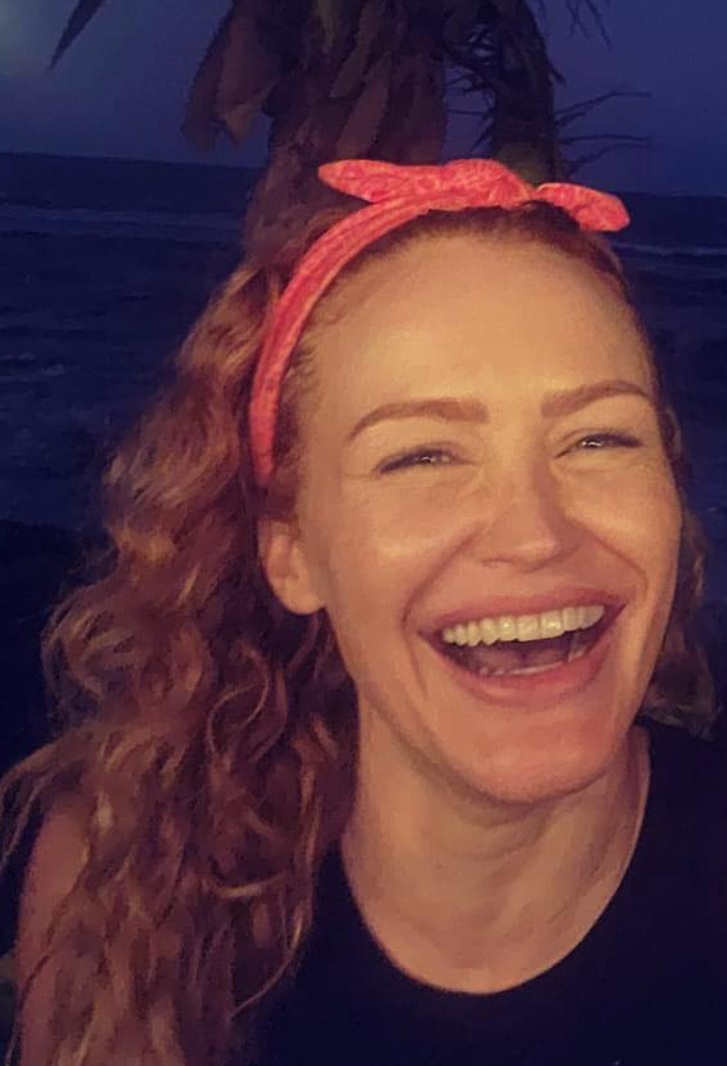
Author/Coach/Registered Nurse
I am an author, a registered nurse and a trauma recovery coach. I am also a woman who spent most of her life figuring out, in increasingly destructive ways, what nobody had ever told her had a name.
What I have was complex PTSD. I did not learn that until my mid-thirties. The years between were the strategies a nervous system finds when it has not been taught a different way. The substances, the wrong people, the work of holding it all together while quietly falling apart and suffering in (not always) silence.
I came to coaching from inside the wound. Not from a textbook or from the outside looking in. From the bed I had been lying in for years before I knew what was wrong.
I write and talk about the difference between what was done to me and what was passed down to me. About what addiction was actually trying to do for me before anyone called it a problem. And about what happens when I stopped performing recovery and started actually living and doing it.
My first book, Addicted to Trauma: A Memoir of CPTSD, Addiction, and the Patterns That Almost Killed Me, comes out Summer 2026.
I live in Durham, North Carolina and part time in San Pedro, Belize, which is my soul’s happy place.
You can find me at carriepdavidson.com.