Breaking Toxic Relationship Patterns | Sabrina Zohar

Have you ever looked in the mirror and asked, "Why am I like this?" Why does the same relationship, the same breakup, or the same painful pattern keep showing up in your life? In this episode... (See show notes below)

 Apple Podcasts
 Spotify
 YouTube
 Overcast
 Castro
 RSS Feed
 Amazon Music
 Goodpods
 Have you ever looked in the mirror and asked, "Why am I like this?" Why does the same relationship, the same breakup, or the same painful pattern keep showing up in your life? In this episode, Michael Anthony sits down with relationship coach, podcast host, and author Sabrina Zohar to talk about her new book, Why Am I Like This? Break Your Relationship Patterns and Create the Life That You Want.
Sabrina shares her own story with raw honesty. She grew up with a narcissistic father and a mother who emotionally shut down. She describes herself as "the poster child" of anxious attachment. Her lowest point came in an abusive relationship that left her suicidal and down to 90 pounds. She explains the moment she finally chose herself, and how losing almost everything let her rebuild her life, her business, and her relationships.
Michael and Sabrina break down why self-awareness alone won't change your life, and why "people love information, they hate doing" the work. It's a deep, unfiltered conversation about childhood trauma, core beliefs, and what it takes to stop repeating the past.
In this episode, you'll learn:
- How your first 18 months shape your attachment style (anxious, avoidant, secure, or disorganized)
- Why your brain and nervous system choose what feels familiar over what helps you grow
- Two powerful questions to ask when you're triggered: "How old do I feel?" and "Where did I learn this from?"
- Why you get hooked on people who don't make you feel safe (intermittent reinforcement and the "slot machine" effect)
- Why the "Amazon mindset" is hurting modern dating, and why you should "burn the checklist"
- Why knowing how you want to feel with someone matters more than a list of traits
- How to set boundaries, handle rejection, and be okay losing people as you heal
- Why a trigger doesn't mean your partner is wrong for you, and what healthy communication really looks like
- What it truly means to be unbroken
ABOUT SABRINA ZOHAR:
Sabrina Zohar is a dynamic entrepreneur and dating coach renowned for her transformative podcast, The Sabrina Zohar Show. With a clear, no-nonsense approach to relationship advice, Sabrina's podcast has resonated globally, ranking in the top 0.05% of all podcasts. Each episode features practical tips backed by board-certified and licensed psychologists, aimed at helping listeners improve their dating lives by fostering self-worth and personal growth.
Connect with Sabrina Zohar:
- Website: SabrinaZohar.com
- Instagram: @thesabrinazoharshow
- TikTok: @sabrina.zohar
- Youtube: https://www.youtube.com/channel/UCSKQduzS78E6-I9tx0jqjpw
- Facebook: https://www.facebook.com/people/The-Sabrina-Zohar-Show/100094409286590/
- Podcast: The Sabrina Zohar Show
- Book: Why Am I Like This? (available now)
Subscribe for more conversations about childhood trauma, entrepreneurship, healing, mental health, personal growth, and becoming the best version of yourself.
Advertising Inquiries: https://redcircle.com/brands
Privacy & Opt-Out: https://redcircle.com/privacy
Support the Podcast: Become a listed sponsor!
Follow me on Instagram @MichaelUnbroken
Learn more about coaching at https://coaching.thinkunbroken.com
Get your FREE copy of my #1 Best-Selling Book Think Unbroken: https://book.thinkunbroken.com/
Advertising Inquiries: https://redcircle.com/brands
Privacy & Opt-Out: https://redcircle.com/privacy

Support the Podcast: Become a listed sponsor!
Follow me on Instagram @MichaelUnbroken
Learn more about coaching at https://coaching.thinkunbroken.com
Get your FREE copy of my #1 Best-Selling Book Think Unbroken: https://book.thinkunbroken.com/
Michael: There's been many times in my life where I have been standing in front of the mirror and being like, "Why am I like this?" Well, more specifically, I've been like, "Why the fuck am I like this? Why is this my life? Why is this thing happening again?" The relationship, the business, the job, the health, the weight, all of the things that happen in life. And as many of you know, my story, my journey, the thing that transpired for me was going deep and taking this work beyond seriously and dedicating my life to it. And that's the same thing for my amazing guest who wrote this book called Why Am I Like This? Sabrina Zohar, welcome to the show, my friend. How are you?
Sabrina Zohar: I'm doing well, Michael. How are you?
Michael: I'm so good. So I have this beautiful book here that you have written. Try to get this on camera for those of you watching on the tubes. I picked this up and I thought to myself, cool, I love the title. Why Am I Like This? The sub headline, even better: Break Your Relationship Patterns and Create the Life That You Want. We live in arguably the hardest time ever to be in a relationship, between the excess of everything and the excess of everything. It's really hard to navigate the day to day. Why are people like this? What's going on?
Sabrina Zohar: Yeah.
Michael: What is the deal?
Sabrina Zohar: I love it. It's like, let's start with a loaded question. To your point,
Michael: Total, a hundred percent.
Sabrina Zohar: When I first was writing this, I was like, "Can I title it What the Fuck Is Wrong with Me?" And they're, "No, you can't." I was like, "Okay, cool." Because something that I actually talk about often in the book is when we ask why questions, I made it a cheeky way. When we ask why questions, it's actually our brain trying to intellectualize, because we want to be able to avoid dealing with the deeper pain and the root of the issue. So we think if we can understand it, then that way, okay, well, then we won't feel it.
So I was like, all right, cool. I'm gonna give you exactly why you are like this, and where does it really start? Now, I always like to preface, I'm not trying to blame anybody's parents. This isn't about playing victim. I put that shit at the corner. What this is about is understanding where did I learn this behavior from, and who taught me these core beliefs, this messaging. Even if you had incredible parents, right? You could have two rock stars. Every person is going to have different attunement needs. They're going to be coming out differently, right?
And so what I'm really looking at is, what are your patterns? Why are people the way they are? Well, from zero to 18 months, we're nonverbal. So we're not actually learning through any kind of speech. So we're learning through facial expressions. We're learning through how often our caregivers make eye contact, when you cried, when you were hungry, who came to you? How often did they come? Was it consistent? Those then create attachment styles.
And it's the buzzy words. If you're on fucking TikTok, you know all about the goddamn attachment styles, but you've got the four main ones: anxious, avoidant, secure, and disorganized. So you have three insecure and one secure attachment. And that's just how you attune to caregivers when you were early in your development, which then becomes maladaptive coping mechanisms, which then start to impact your nervous system and all the tools and the regulatory things that you use.
And so then all of a sudden you have these maladaptive coping mechanisms that you learn from childhood. But because your brain, one, fucking loves familiarity, and two, your brain is there to keep you safe. It's not here to help you grow. You're going to take all of that because it's like, "Cool, I can conserve energy. If my dad used to do this when I was this, then that means everyone's going to do it. So great, let's just keep doing this." And that's why we start to see patterns. And I think to your point, Wake, you made earlier.
We have so much information, and yet we know so little. We have so much access to information, to becoming the best versions of ourselves, that I actually think it's crippled a lot of us, because I think a lot of people might know why they are the way they are. But then my next question's like, "Cool, what are you gonna do about it?"
Michael: Yeah, totally. And it's funny, I was, I should say, a trauma coach for a decade. About 18 months ago, I stepped away after coaching over 3,000 clients and helping millions of people with this podcast. Because I sat and I realized one of the irrevocable truths of life: people love information, they hate doing shit. And in that, because the people who I've coached over the years who are massively successful,
who actually had transformation, who watched their lives become different, were the people who landed, I guess, in the same boat I did, right? And it was like, "Do something about this. What the fuck are you doing? You're gonna sit here and let this be your life?" Because my story, I was homeless as a child from eight to twelve, drug addict, alcoholic parents, didn't graduate high school. The whole, all of it was stacked against me. I've said it countless times on the show, but the thing that I kept coming to, I was like, "I can do this, I can get through this, I can change my life." That took decades of work and me fucking up in every humanal imaginable way. But ultimately it all began with this belief that I had, which was no excuses, just results. Let me try to move towards something. Why did you write this book?
What inspired you? What is your story? What is your journey? Nobody writes this book unless they're fucked up themselves. Not that I'm casting judgment, as a very fucked up person, but I look at it, I go, there's something in you where you're like, "I had to overcome my own bullshit to get here." And I just love to know what that's been like.
Sabrina Zohar: Similar to you, I was the person that had to make a choice of either I'm gonna be sick and tired of being sick and tired and I'll make a change, or I'll just keep doing the same shit. And my God, I was the poster child of anxiety, anxious attachment. I was a hot mess. I slept my way through Manhattan. A good portion of the book is stories and experiences and times.
Michael: Crazy stories.
Sabrina Zohar: Crazy, right? Moments that I really wanted to exemplify. One, that you can be a total fuck up of a human in a hot mess and all of the things, right? We can call me every derogatory name in the book, but that doesn't also mean that I can't hold compassion and space for those parts of me, because that brought me to where I'm at now. And so I'm not trying to get rid of them, but I want to give them a limelight to say, "I did this because of you, not in spite of you." And so I had a traumatic childhood, right?
Lots of abuse in the home, whether that be physical, emotional. My dad was just very narcissistic, flippant with how he treated us. And my brother was sent away when I was a kid, one of the first stories in the book. And that really impacted my relationship with men, how I saw myself, my core beliefs, everything I had ever put my value around. And then my mom completely disassociated, she was just a shell of a human. So then by the time I graduated high school, went off to college, I dropped out eight different times.
I had problems with authorities, but father wounds, right? It can manifest in that way. That I saw, and this is insidious, but I saw my father cheat on my mom for so many years, and he would bring us around his mistresses, but then just tell they were their friend. But that I wasn't allowed to tell my mom anything. And so I would watch them go into the bedroom at night and be like, "I'm confused," right? "You do that with your friends?" I didn't understand boundaries. I didn't understand what this all meant. She was an alcoholic, so every time I saw her, she was a different person,
all the while my mom has no idea what's going on. And so when I moved to New York, I grew into myself. I was the awkward kid. I had a short pixie cut. I had braces that were gold. I was awkward growing up. And then all of a sudden I lost a ton of weight. I became hot in New York. I'm 20 years old, 19, I just moved here. I've had, I think, two partners prior when I was out of high school. I didn't know anything. So I genuinely believed if I just sleep with someone, right? That's how they get my dad. He has no problem being with different women.
So that must mean what I need to do is get someone using my body and fuck everything else. So I dated more than I probably, two, three people a day sometimes I was going on dates with. I was running the fucking gamut. I was so obsessed with external validation, right? "If you just tell me I'm pretty and I'm not too much." Repetition compulsion. I kept dating the parts of me that needed to be healed, because I kept hoping by doing that it would heal me.
And it wasn't until, honestly, I was with someone who was just like my dad. And he's the big story I talk about in the book and later in the chapter. When I saw him, I was like, "That's my husband." And he sent me into rock bottom. And I remember calling my mom saying, "I can't do this. This is not okay." Started therapy. I ate shit for years. I still kept dating narcissists. I still kept self abandoning. I want to dispel any of the bullshit that once you get into therapy, you're highfalutin, and all of a sudden all of this goes away. No, it doesn't.
And so I then manifested my anxiety that I had in dating into my career, my friendships, everything was happening. But I became more aware. And then by becoming more aware, I started to then understand my behavior. By understanding my behavior, I could say, "What are my choices?" I learned about the nervous system. All of that culminated to a, sorry for such a long story, but I'm gonna keep going. And
Michael: Please, I love it.
Sabrina Zohar: So I had a clothing line at the time called Software, and I started that. My mom went to the doctor with a headache in 2017, and they found six brain aneurysms and two corotid arteries of her neck, and gave her three to five percent chance of survival. And I was working at a company, they embezzled the money, closed the company. I was stuck with this apartment I had just signed. I had no fucking money. I didn't know what I was gonna do. I'm about to lose my best friend. And my friend, her brother, said, "You know what, why don't we do the company?" And I was like, "No way, I can't do that."
My mom, they created a coil, it worked, it saved her life. And all of a sudden I got a photo of her in the hospital, two thumbs up, and I said, "All right, let's start the company." So I started my clothing company, and I ate shit for years. I bootstrapped, I never had enough money. COVID hit. I tie-dye everything. I make a million dollars that year. I am finally living the life, but it was never enough. If I made $5,000 in the day on the company, I needed to make six. If I made six, I needed to make seven. It was a moving target, because nothing external was satisfying the internal, right?
The abandonment wounds, the not feeling worthy, not good enough. I'm too much, but I'm not enough. And I kept dating people that replicated the dynamics that would make me feel that. So then I moved to LA in 2021. I was done with New York after 12 years. I said, "It's time for me to move the fuck on."
I dated enough there and got to LA, and I hated it more than I ever thought I would, because I had no money, I had no friends, I wasn't a Fortune 500 founder. I was just some girl from New York trying to find her own peace of mind in LA. And I realized, as a New Yorker, people didn't love that dynamic here. And I was supposed to be on Shark Tank. So September 2022 or July 2022, after six, seven months of prep and calls and meetings and everything you can imagine, I'm on set. This is it.
This is gonna save my business. It's that "when this, then this" mentality, right? When I get this, I'm gonna become a millionaire, and then I'll be respected, and then people will like me. And I got sent home, and they said, "So sorry, we can't fit you on today." And they gave my spot up to somebody else, and I hit rock bottom. And that was it. And this guy that I went on one date with called to see how it went, because he was a business owner. And he talked me off the ledge that night. And I remember that was the moment when all the stars aligned. I had changed the way I was dating, I was implementing things in therapy, I was seeing it.
But all of a sudden I was like, "Wait a minute. You don't have to be with every person that you go out with. Some people really are in your life for circumstances." And I started creating content. And when I realized Shark Tank wasn't gonna happen, started creating TikToks. Those started to grow, grow, grow. My dog got sick. He died. And after that, I was like, I could give a shit about anything. And that's when I broke up with this guy. I met my partner three days later. I started the podcast a month later. And I just really allowed me to lose everything so I could rebuild it. And here we are today, fast forwarding to why I have a book.
Michael: Yeah, dope. You're the female embodiment of me as I sit here. Now, as I read the book, and I think I first started following you probably two or three years ago, and I was just watching, I was like, "Do I want to invite this person on the show? What do they have going on?" Because especially on social, people are so full
Sabrina Zohar: Totally.
Michael: Of shit. And I'm just like, let's see if the vibe's for real.
And the stories that I read in your book, I was like, "Yep, I get it." I'm the guy who was building the businesses, multiple failures. I'd hook up three, four people a day, in relationships, not in relationships, in debt, not in debt, just constantly in this unbelievable, painful fucking spiral of just fucking my life up. And it always just came back to,
same as you, watch my stepdad cheat on my mom, watch my mom be an alcoholic, watch my mom attempt suicide. My grandma's an alcoholic, half my family's in fucking prison, my friends were murdered growing up in the hood. And I was just like, I'm living that in so much of this capacity, until I just had this rock bottom moment of sitting in my life and thinking to myself, "Dude, you are exactly what everyone told you you were gonna be. And at what point are you going to decide to be someone different?"
People pleaser, completely lack of any values, any boundaries, anything you want. And same as you, I was like, if somebody will fuck me, I will feel like I'm special. And so it's like, and then, I'll age myself here, but The Game came out, this ridiculous book in the 2000s, and it was like fucking gasoline, jet fuel in the fire. And I went from hooking up with one or two people a week to per day.
And I'm not gonna say my number publicly, but I've talked about this with some of my very close best friends. And I'm like, I'm embarrassed by it. 'Cause you look at it and you go, that's what a hurt soul does. And so I walked down this path of healing, very similar to you. Walked the business path, tried to make these things work. And you said something that I wrote down here that I thought about. And it's like, it's not until you let go does it start to actually get better.
And I think there's two parts of it. I don't know if this was true for you. Two things happened for my life. One, I was like, "Fuck it. I'm letting go. Whatever happens in this business happens." 'Cause I was holding on, white knuckling for dear life. And then two, I was like, "I'm actually gonna stop giving a fuck if anyone likes me." And that's where most people are trapped. They're afraid to do the thing, say no, say yes, exist in the capacity in which they want to exist.
So when I think about the pivotal journeys that we go on, so much of it, I feel like it really exists in the nuance, because it's like fucking up your business and hooking up with strangers are like smoking cigarettes, right? You quit every single day until you quit. And so I'm curious, I want to go deeper, because somebody is listening right now, and they're gonna be inspired by this. They're gonna grab the book, they wanna go deeper into your world. What was that final straw for Sabrina where you're like, "I'm gonna fucking fix this"?
Sabrina Zohar: First of all, can I just say how much of a badass your story is, how much of a badass you are? Thank you for being that light.
Michael: Same.
Sabrina Zohar: At the end of the tunnel, right? It's awesome to see, 'cause for me, I don't know about you, I feel like you'll probably relate. I don't find inspiration from people that haven't struggled to get to where they are, right?
Michael: Not at all.
Sabrina Zohar: To me, there's nothing inspiring of, "Well, they came from money, so this is not that difficult." But I think it's pretty fucking rad that you were able to get out of the depths of hell and be able to now share that. So just wanted to say fucking thank you. And
Michael: Same. That's why I wanted you on. I was like, kindred fucking spirit here.
Sabrina Zohar: Yeah, it's true. So I think, God, wait. I had so many things, because as you were talking, I'm like, "Yes, and yes, and yes." I apologize. What was the question that you had asked me?
Michael: I wanted to understand your frame of exactly where you were in the moment you decided that you were gonna love yourself enough to stop fucking your life up.
Sabrina Zohar: Yes. So for me, I was the non-traditional path. I wish it could be some big moment where all of a sudden I was on the floor and I saw God and I had this talk with him. No. It was when the ex in the book that I talk about, the biggie, when he and I first met, I was very much a shell of a human. So prior to that, I was with a guy, lovely human being,
but the type of thing that you're like, "They're there. Let's just be together." And then you're like, "I don't actually like this person. We're not compatible long term. You're just a great guy. No, thank you." Right?
Michael: Story of my life.
Sabrina Zohar: 'Cause I was like, "Yay, I have a boyfriend." And then I was like, "You don't just want a partner. You want the right partner." And so we broke up. And then maybe two months later, I met this other guy. And at the time, I was a pack-a-day smoker. I quit cold turkey. I was on three kinds of medication. Did not know you should not quit cold turkey. So please talk to your doctor.
I said, "Fuck it," and quit cold turkey. It was really gnarly. I quit sugar and I started working out. So, changed my life within a month. I had cystic acne. I was getting brain zaps. I was so miserable. But I was working 15-hour days. I'd go to the gym at 5 a.m. I'd go to the gym at eight o'clock. I didn't care. I knew for me and my dog Clem, I had to do something for us. And so then when I met this guy, he was in fitness and health and wellness and just into it, right? And we both connected over going to the same classes, and
I remember calling my mom being like, "So this is it. If I had to wait for all the frogs for this to be the prince, it fucking was worth it." And we dated for a month and a half. And I remember doing the, "I'm gonna play it cool." We didn't sleep together for a month. "I'm not gonna bring things up. I'm gonna play this differently." I chuckled when you mentioned The Game, because I'm like, "I remember that." And we end up, I think it was out of nowhere. If I'm not, yes, I remember I was going to boxing,
and I text him, and he didn't answer for eight hours. And I was like, "Okay, that's not normal." Even if I text him, he'll answer. And I remember he just went, "Nice." And I was like, "Okay, okay." And I was like, "Hey, is everything good?" And I get hit with the, "It's not you, it's me. I'm not ready for a relationship. I think you're amazing." And I remember being in the shower, and I had a clear thing so that I could text in the shower, because I was so anxious I couldn't be without my phone. So I would put it in the case and I would just keep. So when I saw the thing, I remember screaming, and I called my mom and I said,
"What the fuck is wrong with me? This has to be up. This keeps happening, Mom, every time." That's when she got sick. So then I dove into that. Then, I wish the story ended there. I still hit my rock bottom. I was in therapy, but I don't think she was a very good therapist. And I went down to Florida. I was with my mom while she was having all of her shit. I come back to New York. This is when the job stuff happened and everything with the company. Fast forward to November, I am on Bumble.
And there he is. And I thought it was a fake profile, 'cause he had a photo with his girlfriend three days prior. Mind you, two weeks after he ended it with me, he got a girlfriend. And so of course I'm going through the, "What is wrong with me? She's super petite. Is it he likes short women? Is it that I was too tall? Was I too thin?" Of course I'm trying to figure out what the issue is. "Why'd you go for her, not me? It's 'cause she's smarter than me." And so I sent him a DM and I said, "Hey, somebody's catfishing you." And he went, "No, that's me. Which way did you swipe?"
And all of a sudden we matched two seconds later. And that was the beginning of the worst year and a half of my entire life, where I hit rock bottom. He broke up with me to teach me a lesson. And he left me to go on a vacation that we had planned together. And he went without me. And my mom came, and I was suicidal, and I wanted to take my life. And I would literally, I lost, I'm five eight, 130 pounds. I was 90 to 100 pounds. I was sick, frail. She is not okay.
And this is the pivotal moment for me. I was doing tapping. I don't know if you're familiar, but tapping on the acupressure points. And the therapist, I legitimately thought, I said, "It's all my fault. It's all my fault." And so she repeated it back to me. And I remember just going, "Well, it couldn't have all been my fault." And that was the crack in the armor that then I never saw him the same. I took the shine off of him. When he got back, he lived with me for three months, because he didn't want to go and pay for an apartment. So he figured he'll just stay at mine.
He and I were coming back from a class, and he looked at me and said, "If you knew what the fuck you were doing in your business, you wouldn't be such a pathetic person, because you're never gonna actually fucking make it." And something just snapped within me, and I said, "Get the fuck out of my house."
And that was it. He almost hit me. He hit the table, packed up his shit, and I never spoke to him again. That was the moment where I was like, I had never chosen myself before. I had never said that I mattered. Now, did I still fuck up after? You betcha. Two months, three months later, my sister introduced me to a guy, and I got head over heels, and, right? But it started then, because honestly, had he not broken up with me, I don't know where I'd be.
Michael: Yeah. Yeah. It's funny, 'cause I used to have these experiences of looking at the end of relationships, and I would think to myself, in a lot of different capacities, something along the lines of, "Well, I guess this is just gonna be what it is for me." And I would just continue to have these moments and experiences. And then I read, speaking of The Game, I read The Truth. So Neil Strauss wrote this book called The Truth. I don't know if you've read it or not. It's fucking unbelievable. I believe it's one of the greatest books. Someone who experienced alcoholic parents and childhood trauma and coercion, if you've had that, you should read this book. And I'm not a big "should" thing. I'm like, read my book, of course, and read Sabrina's book, but also read Neil Strauss's book. So I read The Truth. It's 2011, 2012, I think, somewhere in that window. I'm reading this book, and I realized, because he had the same experience that I had. At some point, he was in this men's group,
or with his therapist, I don't remember, but he was in this rehab for sex addicts, effectively. And I was like, "That's probably where I'm headed next." And I'm reading this book, and he's like, "And then the therapist said to me, 'You know what? Your problem is you keep dating your mother.'" And in that moment, literally, I'm sitting at my desk building my fucking first company, and I had a complete mental breakdown being like, "Every one of these women is my mom. All of them." And here I am again, fucking again and again and again. And again, of that thing about on the backside of the realization, you still have to become the person who's not that anymore. And so it took me fucking years to move through that. And it was a lot of the same thing. I always tell people the first four years of this journey were two steps forward, a hundred steps backwards. But I was like, "I'm just gonna keep going and going and going."
When people have these experiences, I think they feel massively alone and ununderstood, and they feel lost, misunderstood. They feel lost. They feel like nobody else gets it. But I'm reading your book, I'm like, "I get all of this." What did you feel connected to other people in this journey? How did you navigate the day-to-day, outside of therapy? Because therapy only gets you so far. I love therapy. I'm gonna get emails from therapists who are like, "Fuck you." I love you guys. You get it. We've had this conversation.
My point is, but that's not enough. Where's the rest of the human experience sit as you're in this healing space?
Sabrina Zohar: 100%. I would say the example that comes to mind first is, it's like saying you have a trainer once a week, but then you go home and you're eating Twinkies and donuts, and you don't go walking, and you do anything. So if you expect that just going once a week for an hour is gonna change your entire body and your life, you're kidding yourself, right? I think there's a difference too. For a lot of people, I hear this all the time, "I dated somebody and they're in therapy and they still did that." Well, intellectualizing is very different than implementing and integrating. So when I first started, I remember my lid was blown, similar as you,
because, so two questions I ask in the book: How old do I feel? And where did I learn this from? Because 99.999% of the time, when we obsess over people, it's usually people that don't make us feel safe. And the reason that we're doing that is because intermittent reinforcement, it's a slot machine. It's the same shit that causes.
Michael: Feels normal.
Sabrina Zohar: It feels normal when you have chaos as your fucking baseline, thousand percent. Again, nervous system and brain are designed to keep you safe, not to help you grow. It takes more energy for them to be like, "Let me challenge this." So it goes right into repeating patterns. Repetition compulsion is essentially what we're talking about. So when I first started doing this, I'll never forget, my friend, beautiful woman, she stopped me and she said, "Sab, you're so self-aware, but what the fuck are you gonna do with it?" And I was like, "Wait, what? I thought this was it, though." I was like, "But I'm self-aware, right? I know why I do things."
Well, but knowing why, explanation or excuse, right? Knowing why doesn't mean I'm actually doing anything about it. Doesn't mean I'm making different choices, doesn't mean I'm responding versus reacting. And so as I started to go through, I think the biggest lesson I learned in my healing journey is that you have to be okay losing people if you genuinely want to start to grow your own version of yourself. Because as you start to heal and grow, you're setting boundaries, you're saying no, you're choosing yourself,
which means the people that benefited from the fact that you didn't are going to be upset. Those are the people that'll say, "After everything I did for you, this is how you treat me?" It's like, "Because I said no? Yeah, this is how I treat you. I don't owe you anything." You start to be okay losing people, and I started to lose people. I started to realize, "This just ain't it for me." Truth be told, I would say the reason I am where I am in my career is because I've shared my stories, because I make people feel less alone. "Hey, listen, Snowflake, you're not the only person that's gone through this."
I have slept with two people in a day. Am I proud of it? You know what? Fuck it, right? I'm not gonna judge myself on it, because I was 22 and I didn't know any better. And I think being able to meet people and talk to them, not at them, is a really beautiful thing. I'm no guru. I'm not better than anybody. I'm just further on my journey, and I have more hindsight to give a clarity on where the fuck all of us are going. But this journey never ends. I have never met one person that is fully healed, because there's no such thing.
You're gonna get triggered. People are gonna piss you off. You're gonna have partners that you're like, "I thought I worked on this." Well, it's triggered again. That's an invitation for us to get curious and to grow, as opposed to, I think a lot of people, and I'm sure you see it too, "Just stay single, protect your peace." It's like, "No, babe, that's just avoidance. You're just avoiding getting deeper in the work." Now, I'm not saying be with someone who triggers you, doesn't give a shit about your emotions, and consistently fucks with you. That's not the point here.
But you're gonna have people that will make you feel anxious or avoidant or any of these things and make you wanna run, maybe remind you of your mom, remind me of my dad. That doesn't mean they're bad people. That just means that we need to see, does the pinch match the ouch? And the way that I'm perceiving this and the story I'm creating, is that matching the actual situation that's in front of me?
Michael: Yeah. I never heard anybody say "when the pinch matches the ash." I love that. You should coin that. It's what's really interesting, as you're talking about that, I'm sitting here and I'm thinking about these experiences, even at 41 years old, sixteen years into my healing journey, seventeen years as an entrepreneur, and still the other day I was ready to freak out about something that happened.
And I'm just like, "Are you fucking kidding me?" I thought I'd do, and I'm lucky, I have my therapist on speed dial now. This dude changed my life. And I was like, I don't need him all the time, but when I do, it's bat signal. And sometimes he just give me this one thing and I go, "Yep, of course. I already knew that. Thanks." And sometimes I'm like, "I've just paid you $300 just to be like, tell me what I already knew." Which is fine, by the way, because it just moves the needle forward. But I think that what I have found myself stuck in over the years is, sometimes I feel better off alone. Right.
And I think that narrative comes from, you go through these shitty breakups and you have these awful experiences and you deal with people you don't want to deal with. And then you're dealing with their shit because you're triggering them, they're triggering you. And then you realize, and I'm very blessed with the relationship I'm in now, I go, "Man, I'm so lucky, because I'm willing to fight this fucking battle."
And it's not like I used to be, where I'm just like, "I'm out." One thing, Sabrina, I swear to God, if you left the toothpaste open, I'd be like, "Get the fuck out of my house." Right. And that's such a crazy way to live your life. How do you then, well, you're in the dating and relationship space, right? And that was your chosen vocation as you're in this season of your life. I'm curious, as someone who isn't dating, but I'm gonna preface this with a question.
I've been creating content for 16 years. The most viral piece of content I've ever created, I'm talking about millions and millions and millions of views ever, started with this: "Most women are single because they want to date guys who are six feet tall." And then I wrote this whole thing, and it just went fucking hella viral. And so that leads to this question that I've been thinking about a lot lately, because I saw my friend go through this. This was inspired by him.
Army Ranger, college educated, crushes me in probably every area of life. I'm 6'4", 220, covered in tattoos. He's five foot eight and is the most clean-cut dude in the world. And dating for him was a nightmare for years. And so this all leads to this question: what are the mistakes that you're seeing people make that they're creating the self-elimination of possibility in their dating lives right now?
Not even necessarily just women. That was my context, but what are you seeing?
Sabrina Zohar: Honestly, because I have men and women, I really split the gamut. It's the same side of the coin. It's the other side of the coin, right? It's the shoehorn matches. They have more in common than they don't. I will say, so my partner's six four, say if they like six four, he's two forty, he's a big dude, he's like a linebacker. And yeah, that was my thing. But I would say women have it in a different way, right? Would see the other side of the coin is, if you get above 30 in LA, you're fucking archaic, and nobody wants to look at you, and they act as if you have three heads because you're saying you don't want kids, but you want a relationship.
I think what a lot of people right now, what I'm seeing is a few things. One, and I talk about that in the book too, is we have this idea and perception that almost dating has become like Amazon, right? "I want it at my door immediately. I want to know what is gonna happen. I want to know how it's gonna go. If I don't know, then I want it to go and get out of my way. And if it's not here right now, then fucking cancel my order." We have this lack, right? We have this lack of ability to be uncomfortable. God forbid you get rejected. God forbid you go out and this person says they don't fucking like you.
And I think we're crumbling and turning to stone. I think a lot of people see dating very binary, very black and white. "Well, if he wanted to, he would. Well, if they like you, you not be, will be confused." It's like everything's bumper stickers, because it's easier.
Michael: It's not how the world works.
Sabrina Zohar: Everything, you see what I'm saying, it's very linear and it's binary. But dating, relationships, love is not linear, and it is not binary by any fucking stretch of the imagination. And so I think, I'll give you an example. When I first,
maybe a year and a half before I met my partner, name is Ryan. Before I met him, I really changed the way I dated. I might have still dated the same people, right? Because you don't know, if you're meeting someone out in the wild during a dating app, you don't know their personality type off the fucking bat if they're just nice to you and plan a date. And I started getting better and better with, instead of six months, it took me two weeks, right? So we're making progress. And I started seeing a lot of coaches doing the "text this to get the guy." And I would do it. And I'm like, I got it. Yeah, it was like, I got a dick pic, but I didn't get anything else. I'm like, "You told me that this is gonna make him want me and be irresistible." And I'm like, "He wants to fuck me. I didn't need that." And so I started to just realize this is very black and white. So I used to be in the school of thought of, if they don't text me every day, if I don't get my good morning text, they don't like me and they don't want me. So when my dog passed, you literally don't give a fuck when you lose your best friend. You're like, "I don't care about anything." So when I met Ryan, he was not a big texter.
And I remember thinking, talk about letting go of control of the outcome, I was like, "If I never see this guy again, I never see him again." So we went on our first date. We fucked on the first date. We were at dinner, and I said, "Listen," I looked him right in the eye and I said, "This is new for me, but I'm gonna take up that fucking space. I don't do casual, I don't do hookups. If you want to see me again, that's because we're building something. Otherwise, go get your rocks off with someone else. I needed to get laid tonight, so thank you for that. But if we're gonna continue this, it's because there's more intentionality behind it." And he was just like,
fuck, he thought it was so hot. He's like, "Dude, you were more afraid of losing yourself than you were of me."
Michael: I'm gonna interrupt. I never interrupt people, but I have to ask this question. I probably interrupt people a lot, that's a lie. But I'm like, as a man, there's nothing hotter than a woman who just tells the fucking truth. And men, by the way, because The Game, look, pot calling the kettle black, but I'm sitting here and I look at this and I go, "All these people are just fucking lying to each other all the time." And I think that's the problem. When you're sitting with someone, they take a call with you, they hop into a program, whatever the things you're doing, how much of it is just getting people to admit the fucking truth?
Sabrina Zohar: You know what it usually is? I get a lot of people that'll be like, "No, I know, right? I get it." But then they get triggered, dysregulated, and then they're like, "But I can't make a different choice," because it's back to being a fucking child. When you go back to feeling like you're six, at six years old, I was terrified of losing people. I didn't want anyone to go anywhere. So of course I did everything I needed to to keep them. I'm not a six-year-old child anymore. And I think that, yes, there are definitely the people that I'll say something and they're like, "Pooh, whoa, what?" That unlocks something. And then there are the people that are like, "I've been in therapy for years. I'm doing," because
nothing changes if nothing changes. You have to make different choices. You have to learn how to be uncomfortable, how to handle rejection, how to go, "I don't need an answer right now. That might feel really uncomfortable, but I'm okay not knowing." And for me, at least, that's what I see often, is people want certainty. They want to know. Think about it. If I meet on a dating app, I want to know that they want a relationship with me, that they want to have kids, that they want to get married, that they're gonna text me every day, and that they have this much money, before you've even fucking met the person.
And it's like, listen, I understand vetting, right? And making sure that this is somebody that you don't waste your time to go out with. But we have so much rigidity. The checklist, burn the fucking checklist. You don't need to have, you know what? Here's the funny thing. 90% of the time, when people come to me struggling, really struggling with their life, dating life, maybe it's a breakup that just happened, they keep repeating the same patterns and a dynamic with their partner that's not healthy. When I ask them, "What is it that you want in a relationship?"
I get, "Well, that they go traveling with me and that they're okay with my schedule, that they text me good morning, that they buy me flowers." But 90% of people forget how they want to feel with someone. They forget how they want to feel. "Do you want to feel seen, heard, and understood?" "Yeah, I do feel safe with this person sometimes." "Okay, so then you don't actually feel safe with this person." Because "sometimes I feel safe with them" is conditional. And that means you don't know when it's gonna happen, which then also means that you're not that safe with this person, right? There's contradictory statements
that you hear, because I think what you think you want isn't actually what you need. Because when I met Ryan, I wanted someone to text me every day. He didn't, but I needed somebody who was an anchor, who was setting boundaries, who was like, "I'm not interested in that type of relationship. I'd rather just spend time with you and get to know you." Because it works really well. He's the yin to the yang. The Venn diagrams overlap just enough. If I had someone just like me, I don't know that it would work. And so I think a lot of people are so focused on what you think you want,
but not actually realizing what you need. And what you need is usually what you didn't have growing up. I'm curious, your partner now, do you find that your needs are satisfied in ways you never had before?
Michael: In many ways. And a lot of that still we're working through, because we're humans and needs change. And I don't expect to be the same person tomorrow as I am today. But it all starts with me telling the truth. I am such a fervent believer of, "I'm just going to tell you how it is." And not in the way I used to be, by the way, because I used to be the "it's my way or the highway" kind of person. That doesn't serve anyone. And in fact, it probably took away a multitude of amazing opportunities from me over the years. But now it's like,
"Hey, this is the reality of who I am. That's where you are. Can we create the Venn diagram, the yin and the yang? Can we have that experience together? Because I want the same thing in return." And I think that's the place where I've learned the most, is just in the communication of being able to assess, "Where am I at? What do I actually need?" and say it. And people are afraid, because they're afraid they're going to be needy.
They're afraid that they're not going to be wanted. They're going to get rejected. Yeah. Sometimes you're going to be rejected. That's even within your relationship. That's not necessarily personal, right? It's just, "Hey, not now. It's not right. This isn't a thing. I can't do it." But there are non-negotiables, right? And you talked about people have these lists. I came up with this idea called the 60 questions, 'cause I realized after my last relationship ended, I was asking the wrong question.
And one of my mentors, who has helped me tremendously in business, he would say to me, "The quality of your questions determine the quality of your life." And I ended up in this relationship where, on paper, this woman, she checked every box except two of the most important, that if they're not in alignment, you're not gonna fucking make it. And that was around religion and family. And I was just, "We're doomed." But we end up being together for almost a year. So then I created this list, and it was like, "Let me just ask the right questions."
And so for me, that's what it has led to. Now I've asked the right questions. This person's incredible. We're building and growing, and that is very fulfilling in a lot of ways. And so, I guess, same for you. You're in that moment, and you have to make that declaration to yourself of, "It's what I need, not versus what I want." How hard is it to let go of that side of yourself? What is that like?
Sabrina Zohar: Well, that side, but we have to remember that part of you played a part, right? If we say, they stay small, "I don't want to say anything, I don't want to too much," because somewhere along the lines I learned that I was too much by taking up space. And so I think that's the misconception. You don't understand how many people will message of, "Can you fix me?" And I'm like, "This isn't how this, you're not.
Michael: Is that a real question?
Sabrina Zohar: Yeah. Somebody asked me, "Will this book fix me?" And I said, "Nothing's gonna fix you, because you're not broken," right?
We have to start to dispel all of these myths in the healing world. But I think, again, for a lot of people, taking up space can feel threatening and rejected, because you're scared of losing people. If you're not ready to grieve, then you're not ready to be authentically yourself. Because, yeah, I had to learn that, similar to you. When I started creating content, I lost a lot of people. I had friends that I had been friends with for years.
Michael: Yeah. I wanted to ask you about that.
Sabrina Zohar: My God. I would go to their profile and be like, "They unfollowed me?" And then I've had people that'll message and they're, "I'm unfollowing you." And you're like, "Fuck off. It's not an airport. You don't need to fucking announce it." And I had to be okay with people saying, "She speaks too fast." It's like, "Then fucking learn how to listen faster."
Michael: Yeah.
Sabrina Zohar: Because my mom always said, "If you don't stand for something, you fall for everything." If I don't have conviction in who I am, then how am I going to be okay with who I am? And one question my therapist asked changed my life was, "What are the parts of yourself that you think are unlovable?"
And I said, "My anxiety." And she's, "All right, go on." And I said, "Why would anybody love that?" And then I realized, I was like, "I don't like it. How can anyone else?" And to this day, my partner, anytime I'll feel something, I'll hear him, and he'll be like, "I don't think you're too much, by the way." And he'll walk off, because I'm like, "Thank you. I needed to hear that." But I think for a lot of people, let's think of it this way. You look at two people that are breaking up, and I got fucking ripped a goddamn new one when I made a video about this, but I'm gonna fucking say it anyways.
You look at two people, right? And I'm not talking about, I want to take out parts of this story that include abuse or emotional neglect. I'm not talking about obvious issues, but I'm talking about you dated maybe one, two, three months, right? One person says, "Hey, this isn't for me. I don't think this is right." They move on, right? Then the other person is saying, "It's the end of the," they're mourning after them for eight months, they can't let them go, they're checking their social media all the time.
What's the difference? The only difference between the two is the story that they're telling themselves. Because if you actually talk to the person that's pining after them and mourning them, 99.9% of the time, it's, "I miss how I felt with them. I miss the idea of them, their potential. But they were great in the beginning." It's like, but none of it's actually who this person is, which is why the other person was able to move on, because they saw it for what it actually was, not for what they were hoping it was going to be,
or their core beliefs trying to reaffirm a narrative. Because confirmation bias is a fucking cunt of a girl. That confirmation bias will have you say, "See, told you, knew it. I knew they were gonna do this. All men do this." All right, baby. What happened in the beginning? What questions were you asking? Did you set boundaries? Were you going slow? Were you challenging thoughts? If you do all that, I could all but guarantee you, you would have seen this in the beginning. And I'll give you a very quick example of what I mean. I had a celebrity reach out to me two weeks ago. Massive.
I've had one other before. I've had celebrities follow me, but not reach out to me to talk to me. And he messaged me, and he was like, "Hey, I could really use your help. Can I book with you? Here's my number." And so we start voice noting, and he's saying, "We could do this, and I'll help you with this and with the book." And I remember just going, "You know what? Why don't we just have a session? Let's start there." Because I was future faking and all of the idea of it, and my God. "And if he does this, and then I become famous," and all. And I had to keep going, "Sabrina, stay in the present moment." So his assistant books the appointment. Great.
Five days later. And my team cancels my day. They're like, "Okay, we need to focus. Really be present with him. Don't be tired. Girl, go for your workout and go fucking talk to him." Ten minutes before the appointment, I get an email: "So sorry, he's not gonna make it. Can we move it to Monday?" And the part of me that holds really firm boundaries, I was like, "No, sorry." I have a no bold, I do not fuck with this. I book out a month in advance.
If you cancel 10 minutes before or you miss your appointment, you gotta pay. "Sorry, babe, this is on you." And right, and I said very firm, very strong boundaries. And I said, "Hey, this is really inconvenient. I have to move my entire day, but I can fit this person at 9 a.m. on Monday." "He'll be there a hundred percent." What do you think happens Monday at nine? Literally 8:55, I get the, "He's gonna make it, but maybe later, if you want to talk to him."
And I wrote back and said, "No, I'm sorry, that's not how this is going to work." And I said, "I feel very disrespected for my time." And they wrote back and said, "We're happy to pay you. Why don't you send me your Venmo?" And I said, "This isn't about the money. This is about principle. I moved my entire day. This is the second time you canceled moments before the session." And so I said, "If you'd like, I'm willing to give you one reschedule," because I really wanted to work with this person. And I never heard from them again. It's been months. I never heard from them. And you know what it was? Well, that was a few weeks ago, but it had,
nonetheless, I just realized I don't want anyone to know who this is. So now I'm realizing, by the time this is coming out, it's months later. So we'll scratch that, anyways.
Michael: It will be months later.
Sabrina Zohar: Yeah. So, anyways, time goes, I never hear of this fucking person again. And all this is to say, had I held my boundaries from the beginning, I would have ended in the same place I'm at now. But I would have not lost my dignity. I wouldn't have lost clients that day. I lost out on four appointments because of it. I wouldn't have had to reschedule my entire afternoon. I wouldn't have been bummed and sad, and I would have said, "I'm okay losing people, because if me setting a boundary with you is what sends you running, then you're not fucking right for me."
Michael: Yeah, totally.
Sabrina Zohar: We're also terrified of taking up space, because if the other person doesn't like it, then good. Let me open the door so you don't waste space and time for the right person trying to fucking come into my life.
Michael: Yeah. Yeah, totally. My whole team understands this, because beyond the podcast, we run companies, we have clients, we do all these things in the back end, and I have always told them that we serve the people who are at our table. If somebody's not here, I don't give a fuck. I did this four-day event two weeks ago, three weeks ago. And at the beginning, I say, "Look, if you want a refund on the event, you have an hour to do it, 'cause at the end of this, I'm not gonna offer it."
And so some people take it up. And it's at the very beginning. I've done nothing. They don't know who I am. We've covered no content, nothing. And I curse. I always have cursed. My first word was actually "fuck." This is true. If that tells you the home that I grew up in. That's true. That my grandmother told me. Now, assuming my grandma is a liar, which, my grandma was a racist white lady from Tennessee, so she probably was a liar too. But that was my first word. So
chances are, within a moment, I think the first time I messaged you, I was, "I fucking love you. You're amazed," right? That comes to mind. So 25 minutes in, because we keep a check of all the, we have all the records and KPI, we look at everything from the metrics. And this woman had emailed, "I'm a believer in God and I don't like curse words, so I'd like a refund." I'm like, "Great, here's your fucking refund. See it later. You're not my person." And my team were sitting down,
and they're like, "Man, that was crazy. They wanted a refund because you said fuck." And I was like, "Yeah, they don't need it at our table. They can go to fucking Olive Garden, because they ain't served here." And I think that's one of the things that served me really well in my life, is getting to that place. That's why I said, when I learned to let go, because I was such a people pleaser, because it's a protective mechanism. I had to learn how to make sure that the people around me were regulated in their chaos so I didn't get my ass beat. And so as an adult in my twenties,
I started to notice friends would be like, "Dude, what is wrong with you? You're scared of women, and you're scared of this, and scared of that." I was so afraid of rejection. And now I'm like, I chase it. I'm like, "I don't give a fuck. You can tell me no. Who cares? It doesn't change my life. Your no does not change my life." And I think that's what people need to sit in, because it's so deeply unsettling, because they take it too personally.
And I've come to realize, no, again, this is a place that I've gotten canceled before. I don't mean no means no. I mean, no contextually means no when the fuck it means no. We're not stupid. But no doesn't always mean no. No means not right now. It's not the right time. My dog just died. My business is failing. The thing over here is not working. I'm sick. I gotta reschedule. No doesn't always mean, "Fuck you, I hate you, and you suck." No is, "I have my life too."
How do you get more comfortable sitting in that, right? 'Cause even, we get shiny object syndrome, slub hits you up, it's happened to too, we're in clar day. How do you get back to center after you fall off?
Sabrina Zohar: Couple of things. I think you allow yourself to feel it. That's, at least for me, when it happened, I went down to Ryan and I said, "I'm really bummed." And he was like, "Yeah, I don't blame you." And I just cried for five minutes. And I was like, "Okay, I'm glad I got to do that." But then I start to ask myself, right? Because I think, to your point, when you take things personal, then what's happening? There's an entire fucking chapter, I think it's a chapter or section, about core beliefs.
Because our core beliefs are what's running the show. "I'm not worthy, I'm not deserving, I'm not good enough, I'm too much, I'm not enough," right? All of these different variables. "No one's ever gonna like me for this, and people don't like this." And those become absolutes. And I think we're in a time now where feelings over facts, right? And I had somebody, I said, "Your feelings are valid, but they're not factual." She didn't understand what I meant. And what I was saying is, just because you have a thought doesn't mean you have to follow it. It's like a cloud. Are you a fucking pigeon? You're following every single thing that you see.
But 99.9% of the time, when I face rejection, and I'll give you an example. I hired a manager, and she misunderstood the agreement, quote unquote. And she fucked us over. And I remember I got sad, and Ryan looked at, and I was like, "You know what? We're gonna figure this out. I'm telling right now, we're gonna figure this out." The next day, I get an email from a brand for a $200,000 contract. And I looked at him and I was like, "I would have had to fucking pay her 15% of this." And I was like, "This is what I mean by it. You get what you need when you fucking need it."
All of us have something, some type of protection, but you're not gonna see it. So we have a part of our brain called the salience network. The salience network is responsible for hyperfocusing on things that you're focusing on. So if I were to tell you right now, "Go out and find six things that are yellow," you're gonna see them. And all of a, you're like, "Wow, I didn't realize there's so much yellow in my house," or that there's not. Because when we hyper focus on something, your brain's like, "I gotta focus all of my energy onto that."
And so what we want to do is, one, regulate your fucking nervous system. Stop being so out of control of your own body. Get a rubber band and wear it around your wrist and snap it. Have sour candy, ice cubes, the mammalian divers response. Go for a fucking walk. Do 20 jumping jacks. Regulating doesn't mean you all of a sudden feel better. It means your prefrontal cortex is activated, so you can come from a place of choice. Then I want us to actually understand what factually happened, and then what is the story I created and the meaning.
So, for instance, they didn't text me. "They didn't text me" doesn't mean they hate me, they don't like me, they broke up with me, and I'm gonna be alone forever. That's the narrative in the story that we're adding into. So once I understand that, I could say, "All right, where do I feel that in my body? What does that feel like?" Because we're so disconnected. As children, we're bottom up. We feel it in our bodies. We don't know what to do with the emotions no one taught us. So we go to our head. We create meaning. As adults, we're top down. We start in our head, and then we want to avoid at all costs getting into our body, because we hate feeling.
That's why, if you ask why questions, I want you to reframe to "I don't like." Instead of "Why didn't they choose me?" "I don't like that they didn't choose me." "Okay, what don't you like about it?" "I didn't feel like a priority." So that's what this is about. It's not about the fact that they hate me. Because then, once I do that, "Okay, they didn't text me because they're at work, they didn't see their phone. Okay, they're on social media. Maybe they don't have the bandwidth to answer my text right now, because I asked a heavy question, or I asked what time they were off and I could see them. Maybe they don't know that yet."
And I know people will yell at me and say it takes 10 seconds to send a text. Not everyone's living your experience. Not everybody has changed right now. You have been talking for an hour. I haven't been on my phone, right? Not everything is immediate, but that's the Amazon generation. And so I think it's first regulate, right? We have to regulate first, above all. Then we go into, "Where do I feel this?" Then we start to bring in the thought process of, "How old do I feel right now? Do I feel like I'm seven?" Then this probably has nothing to do with the fact that this guy didn't text me back. This has to do with the fact that I'm perceiving abandonment. "Okay, now what can I do with that? How can I speak to myself? How can I be there for myself?" How can I support that little me and go, "Yeah, dude, no wonder that would feel really shitty, but this isn't Dad. And I need you to know that I've got your back, and I'm gonna take care of this. And when they text, I'll handle it." We have to learn to sit in the discomfort and be uncomfortable so that we can grow.
Michael: Yeah. The reparenting is real. It really is. It's like, at what point are you gonna step up and give yourself the thing that you should have been given? And you see so many people who, they sit in this echo chamber of their own self. And it's like you can't break free of your own stupidity. I'm sorry, I don't have a nicer way to phrase that.
And maybe I should say ignorance, because you lack the knowledge of the other side of your own capability. Once you sit with somebody like a Sabrina, or like me before I retired officially from coaching people, it was this thing where I would sit with people and I could be a mirror for them, and it would just go, "Hey, have you thought about this reality?" I run two multiple seven-figure companies. I do a podcast because I like doing it. I'm very fucking busy.
I'm not texting you back at three o'clock in the afternoon. But when I'm with you, I'm with you. And I think that's the thing people have forgotten. We're so attached and connected to our cell phones, where you forget that the world is out there. This thing is fucking fake, by the way. Nothing about this thing is real. It doesn't exist. If I walk away from that, my world doesn't change. And people are like.
Sabrina Zohar: To dopamine reward system.
Michael: Totally. I'll never forget, I started dating this woman, was it three, it would have been four years ago, when I lived in Vegas. And I'm dating her, and we go on two dates. And she goes, "I don't like the way you communicate with me." And I was like, "I don't understand. What do you mean?" And she goes, "I text you 90 minutes ago. I don't understand why I didn't hear back from you, because I saw you post on social media."
Sabrina Zohar: I can't.
Michael: And Sabrina, I go, "Yeah, my team posts on social media. I have a team. I have a company. I'm an entrepreneur. I'm doing these things." And in that moment, I go, "Hey, I recognize that I'm not the right person for you. I'm not even going to see you again. Good luck." Because that's the reality. And I had to take that boundary. Old Michael would be like, "You know what? You're so right. I'm sorry. I'm going to send you eight million texts. Here's a dick pic. We'll get this right." And yeah.
Sabrina Zohar: We'll get through it, baby.
Michael: "We'll get through it. I'm sorry. I'm sorry. I'm not the person that you want me to be. So let me become that person." And then you realize, nope, that's not it. But that was me reparenting myself and going, my boundaries are more important than their need for something that doesn't fit into my lifestyle. And that's such a hard thing for people to navigate.
Sabrina Zohar: Your boundaries have to be stronger than their discomfort, because then they're regulating through you. Ryan had the same thing. We had that. When we first started dating, he wasn't a big texter. He would only text once in the day, every other day, "Hey, hope you're having a great day," or, "You free Tuesday?" And then I'd be, "Yeah, yeah, okay, cool." "I'm gonna hop off on my phone." And I'd be like, "God damn, I just got you." And I remember I was like, "I'm gonna sit in the discomfort." I was like, "This doesn't mean anything. How does he show up?" Right.
And for about a month, I text him and I said, "Hey, I'd love to have more texting in between our dates to feel a little bit more connected." 'Cause I was only seeing him once a week or twice a week. So five or six days are going by. We don't really talk that much. And he wrote back and he said, "Hey, so great to hear from you. I'm gonna say no, but let me explain." He's like, "I work in tech. I stare at a computer for nine hours of the day. The last thing I want is another minif my hand to then have to text. I'd much rather have consistent dates with you. I'd much rather get to know you in person. If that doesn't work, I wish you all the best, and no hard feelings."
I was like, "My God, that was so hot." I was like, "Okay." And we made plans, and we went out. And I was like, because now, let me say this. If it bothers you in the beginning, I want you to ask, "In a year, if I live with this person, will that still bother me?" If I live with this person in a year, and I go, "I can see my partner in the office," well, bitch, he didn't fucking text you. Does that matter? Because a good portion of the times, the discomfort of sitting in the unknown is why people, "I want the text."
Because your dopamine levels are starting to come down, because it's a little fucking slot machine. But instead of focusing on how this person shows up, are they progressing the relationship? What are the conversations like? And I would all but guarantee you, I would put money on it, she probably went to her friends after and was like, "I fucking knew it. I told you he was gonna do this. I knew he was playing."
Michael: For sure.
Sabrina Zohar: I can all but guarantee it, because it's the "woe is me. See, I knew I was right." But what people don't realize is that behavior is actually what's keeping you single.
That's the behavior, that black and white thinking, instead of being like, "Hey, you know what? That's a really good point. I know." No.
Michael: We used to call that crazy, by the way. Used to be like, "That person's fucking crazy." And now you can't say that anymore. You get canceled. Yeah, yeah, but you get my point. Yeah.
Sabrina Zohar: Yeah, there's no such thing as crazy, right? But now we say they're dysregulated, right? Of course. And now we have villainized the avoidant, but "the poor anxious person." And I'm like, "No, no, no, no, no." Same side of the fucking coin. Other side of the coin. Take accountability.
Michael: Yeah, I think that there's a big conversation. We have a few minutes left. There's a big part of the conversation that I sit in, just about people as a whole today, where I'm like, "You need to toughen the fuck up." I think that we're living in this time, this is the byproduct of third place gold medals. The things that a lot of people, when we were young growing up, where everything's about Sabrina and Michael, and life should be perfect, and you're great the way you are.
And a lot of, again, this might be me getting canceled again. I don't give a shit. I really don't, because it's my show and I'll say whatever I want. Jordan Peterson, because people hate him for whatever reason, just because he tells the truth, said that one of the biggest problems in the world is the fact that people get rewarded for things that they didn't accomplish. And that's the world that we live in right now. And I think about that often, because
I look at it in regard to the way I navigate my friendships, my relationships, my teams, my business, myself. I'm like, you don't get rewarded for things you didn't do. And yet we built this whole society on the back of it, and we're all suffering through it right now. And I can't help but think to myself, at some point, this is actually gonna get worse before it gets better. And I think we're about to go off the deep end. I can feel it coming, because often I see
these people in the dating space, and I'm like, "They have this so wrong." I have they have it so wrong, because it's like, "No, girl, you should get everything that you want. Be single until you get it." And I'm like, well, then we're gonna have this epidemic of women who are 50 and 60, who are unmarried and don't have kids. And then the biological clock really kicks in, and you're like, "Whoa, look at the mistakes I made." But then on the flip of it, because, by the way, I come at it from both fucking sides, we got this huge society of bitchified men who don't fucking stand up for themselves, who aren't masculine, who are. I drive a big ass truck, I do martial arts, and I shoot guns. As far as I'm concerned, I'm a pretty good man.
Sabrina Zohar: Fuck a dude.
Michael: Yeah, I am, because I shoot. This is what I like. I fucking enjoy it. But the other day, I was getting gas. I just posted on this the other night. I was getting gas, and there was this guy sitting in the passenger seat of his car
playing Nintendo Switch. And the woman he was with, I don't know, sister, wife, girlfriend, cousin, mom, I don't know who it was, but I know that she was fucking pregnant, and she was pumping the gas while this guy was playing Nintendo Switch. And my first thought was, "That guy's a bitch." And so how much of this, as you see and you're interacting, how much of it is, we just need to step our game up? Is that a part of the conversation? Or am I just way off base here?
Sabrina Zohar: No, a good portion of it is. I think people need to take accountability of themselves and what they're allowing. I always say, look at your partner. What you allow is showing you how much you love yourself. Because if you look like that, right? I would look at that poor woman and be like, "So you don't fucking think you're worth more than this. You don't think you deserve."
Michael: That was my first thought.
Sabrina Zohar: Right? "You don't think you deserve more than this type of treatment." I'll tell you this. You want to know why I'm with my partner? I fucking demand it. I will tell him, I'm like, "I have no problem, babe." I book a massage. I'll book a trip for us. I'm like, "I have no problem." I'm the bread. He works for my company. So I have to bring in the money to pay us both. And we have rules. He does the cooking and the cleaning. It works really well for us. But you bet your fucking ass, I'm like, "No, no, no. You need to be a man. You need to show up for me in the ways that I need." And I think for a lot of people, and I'm not big on the feminine and masculine. No, no, no, no, no, because we all have both. And in business, I do need to be more masculine, because I am the fucking business owner. So I can't be a little bitch about it. But I think too, what I see is one.
Michael: Just had this conversation with my girlfriend last night.
Sabrina Zohar: Right? You gotta figure out your role. You have to be okay to piss people off, right? Being a woman in a patriarchy, whatever, it's hard, right? It's not easy. But I think most people are not actually ready for the relationship they perceive it to be. You know why? Because if I see one more fucking video, "If your partner triggers you, they're not right for you. You shouldn't be fighting with your partner." Bitch, anybody's gonna trigger you, because a trigger is a neutral action or inaction. So of course someone could trigger you, because they're a human.
Your responsibility is the meaning making, the story, and then communicating like a goddamn adult to your partner. But people are so terrified. I'll tell you this. The girls that freak out, "You didn't text me, you didn't text me," my first response to them is, "You're not fucking ready for a healthy and secure relationship. You can't handle this, but yet you think you're gonna go and have a tough conversation, have to be honest, to tell your partner, 'Hey, I don't wanna fuck you tonight. You know why? Because I'm not attracted to this behavior.' Or, 'I don't appreciate the way you spoke to me. That's fucked up. I deserve better than you yelling at me in public.'"
We're so terrified. "I don't want to lose them." Scarcity mindset starts to play in. "I don't know if I find anybody." But I'll say this. My brother has said this, and it changed my life. He said, "Sab, do you want to be uncomfortable for the next six to eight months while you walk away from this, or the rest of your life? To you, which one's longer?" And I was like, "Fuck, he's right." Because I'd rather have short-term discomfort for a long-term gain than completely self-abandon trying to keep people in my life, because I'm not doing better,
even though I know better. And that's the thing, is choices are going to be a threat to your nervous system. And I think a lot of people are just, everything is, "I just want to be comfortable." It's like, listen, we all know drugs are bad, sugar is bad, but a lot of people use it and drink and do all these vices, because you can know something's not good for you. That doesn't necessarily mean you're going to make a change about it.
Michael: And that's why people are in relationships for twenty years when they should have been them for twenty minutes.
Sabrina Zohar: Precisely.
Michael: Before I ask you my last question, I'm gonna ask you my second to last question. If somebody's in this space with you, why should they read this book? Why should they read Why Am I Like This?
Sabrina Zohar: So this book will change your life, but it's not going to change your life physically just by reading it. It'll change your life if you actually implement the shit that's in it. If you start to get curious, if you hold space for yourself, compassion. When you release self-compassion, it actually releases more dopamine than getting it externally. So when you can actually say, "Given everything I've been through, of course it would make sense I would feel this," you're actually holding space for yourself. And then that way, we could start to change the way that we view ourselves. This book is the roadmap. It's the blueprint. It helps you break your bullshit blueprint. It helps you get what you need to actually get the life you fucking want, desire, and deserve.
But you have to do the work. And I think that's the issue, is people want, "How do I do it quickly? What's a quick hack? How can I do this fast? I want to know it overnight." To your point, we all want to look like we've figured it out without actually having figured it out. Right. We see this with content. "Just do this yap challenge, and then that's it. Your career is made." And meanwhile, there's a hundred people making these shitty videos
and then wondering why it's not working for them. Because you have to eat shit and put the work in. It's not just because you posted it once, and all of a sudden here you are. People see me and you on this side and go, "So all I have to do is read this book and I'll be that?" No, you have to do what the fuck is in this book. And then after years of eating shit, trying hard, skinning your knees and falling down, will you then rise up like a phoenix from the ashes. Because if you know better, you might not do better. And now is your chance to actually fucking do something.
Michael: Yeah, love that. Absolutely. As you were saying that, the thing that came to my mind was, I do not physically read a lot of books, because I just don't have the mental capacity. And I just kept flipping page after page after page of this, because I was like, "Yep, yep, yep." I wish this was the book someone would put in my hand when I was 25 instead of The Game. I would have had a very different experience.
Sabrina Zohar: Right? It's wild. When I actually read The Game, I was like, "This is real." And it's like, yeah, because then I started seeing it, hook, line, and sinker. My God. The amount of men that negged me and all that. And then you're just daddy issues all day.
Michael: Yeah, totally. You're my target right there.
Sabrina Zohar: Yeah.
Michael: My last question, before I ask you my last question, where can everyone find you, connect with you, learn more about you, and, if they need to, have a session with you?
Sabrina Zohar: Thank you. So SabrinaZohar.com is the website, Sabrina.zohar on Instagram and TikTok. Type in my name, Sabrina Zohar, on some platform and some name will come up. I've got The Sabrina Zohar Show, my podcast, where I talk to a camera for 45 minutes and just help people along the journey. And of course, order Why Am I Like This, so that you can actually do the work. And listen, if I'm gonna get disowned for something, I might as well make a New York Time bestselling author, right? Ayo.
Michael: Damn right. Love it.
Guys, and remember, if you go to unbrokenbsgpodcast.com, you will find all that and more in the show notes. My last question for you, my friend: what does it mean to you to be unbroken?
Sabrina Zohar: To me, being unbroken just means you're a human, because you're not broken, there's nothing to fix. You just have to heal through things. And I think if we see ourselves that we're a broken person, then that means that we believe that someone else has to fix us, because how am I going to glue myself together? So I think if we can reframe that, "I'm just a human who's going through an experience, and I just have to heal through some shit that I learned somewhere along the way," it lessens the blow and allows you to actually move on with your life without shame and blame attached to it.
Michael: Beautifully said. Thank you so much for being here. Unbroken Nation, my friends, thank you guys for listening. If you got any value out of today's conversation with Sabrina, someone in your life probably will too. And I suggest that if you're wondering why they are like this, that you might want to share this episode of the podcast with them, because it might transform not only your life, but theirs as well. Take care of yourselves, take care of each other. And until next time, my friends, be unbroken. I'll see ya.
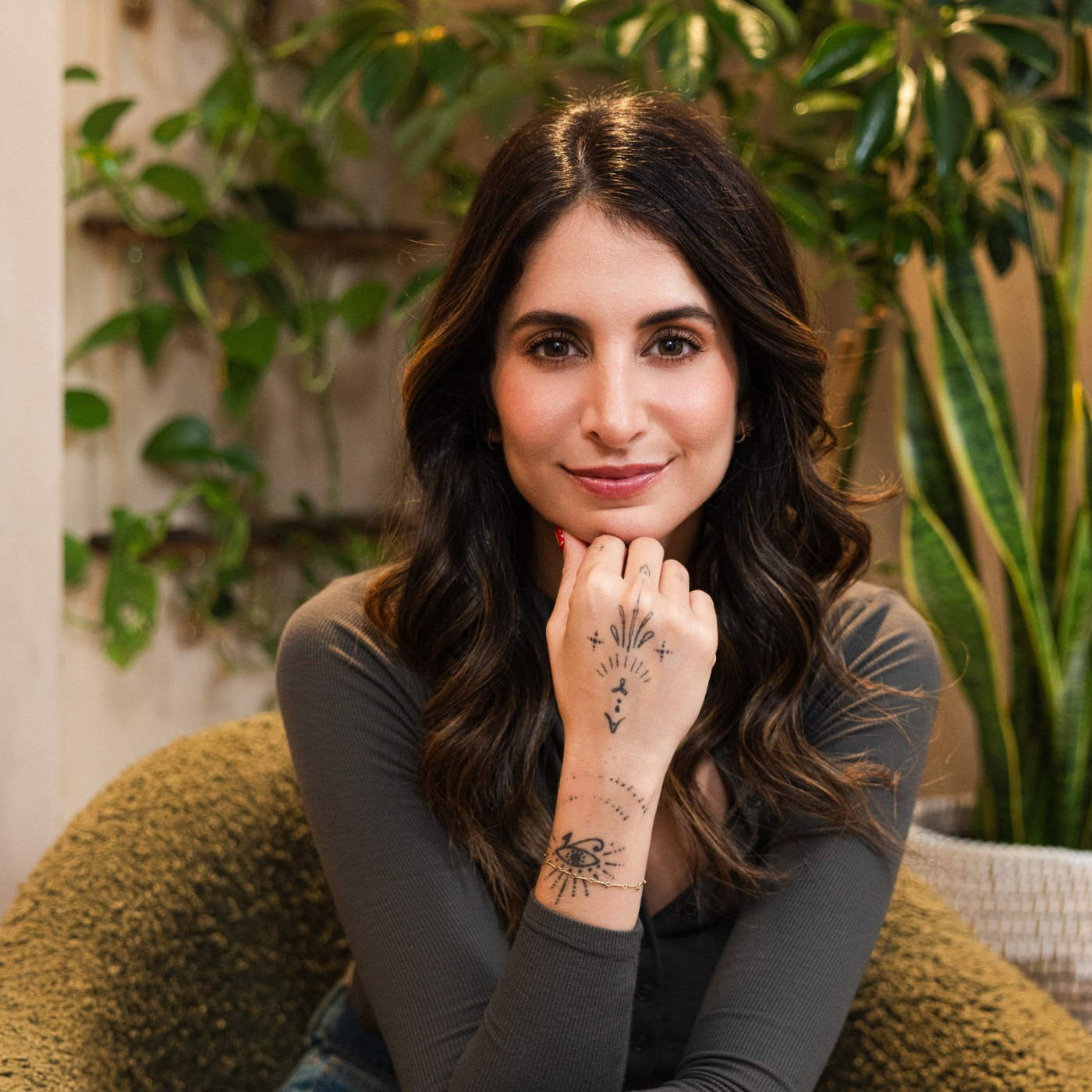
Dating & Relationship Coach / Podcast Host / Entrepreneur / Author (pub. Oct 2026)
Sabrina Zohar is a dynamic entrepreneur and dating coach renowned for her transformative podcast, The Sabrina Zohar Show. With a clear, no-nonsense approach to relationship advice, Sabrina's podcast has resonated globally, ranking in the top 0.05% of all podcasts. Each episode features practical tips backed by board-certified and licensed psychologists, aimed at helping listeners improve their dating lives by fostering self-worth and personal growth.

