From Firefighter to Resilience Coach: How to Find Your Why in Business
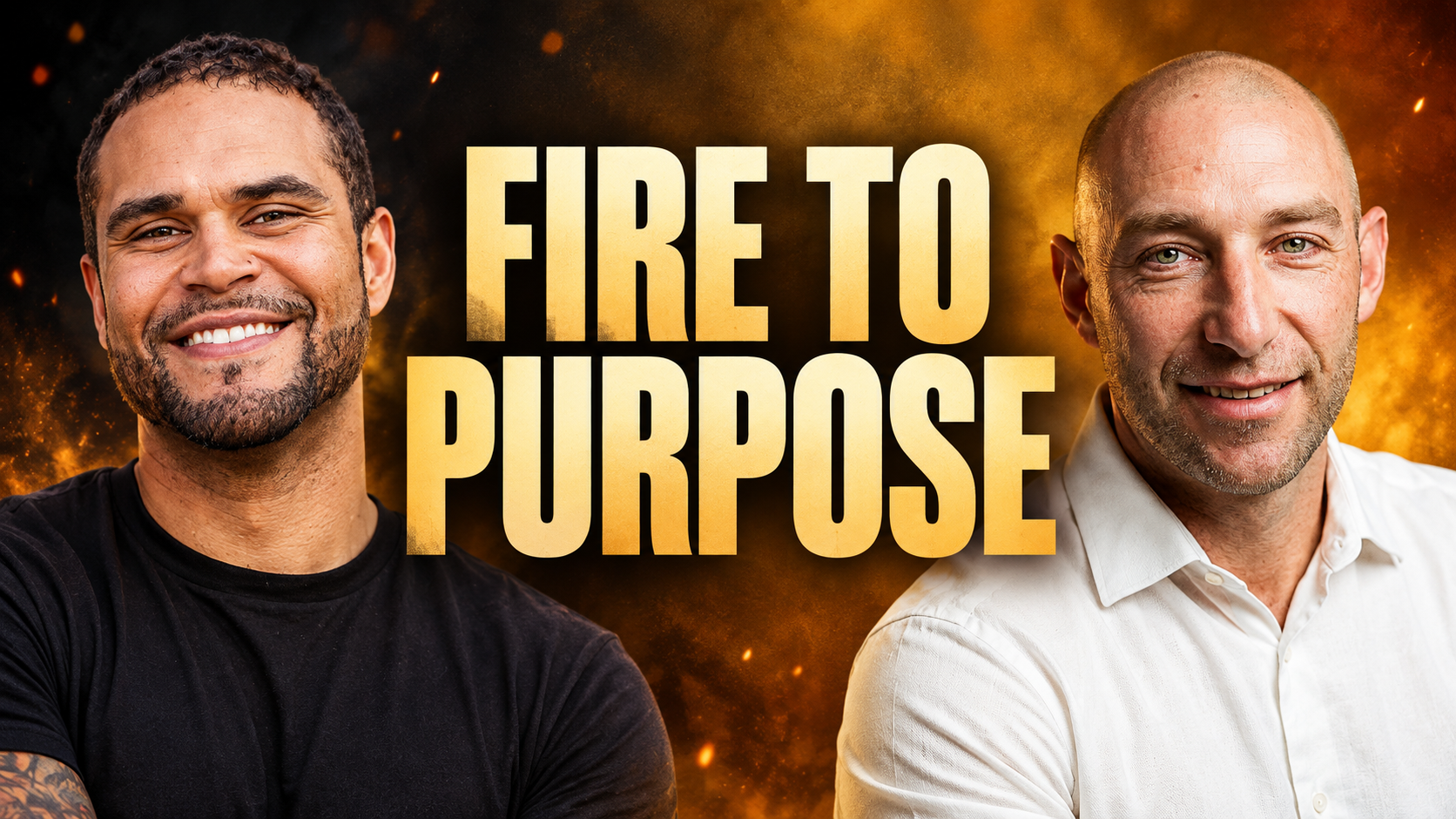
The Journey of Transformation and Service
Personal transformation often begins with a decision to change your mind about who you are, what is possible, and what your past means.
That does not mean becoming someone entirely new. More often, it means becoming the version of yourself required to carry the responsibility of your next chapter.
Darren Richardson has lived that process repeatedly. He began his career in public service as a firefighter and paramedic, dedicating himself to helping people through some of the worst moments of their lives. Over time, however, the cumulative weight of trauma, stress, and identity loss took a serious toll.
Instead of allowing those experiences to end his story, Darren chose to rebuild it.
Today, he works as a mindset, resilience, and mental performance coach. His focus includes first responders, veterans, amputees, and people committed to overcoming difficult circumstances. His work is rooted not merely in theory, but in firsthand experience.
For entrepreneurs, that distinction matters. Your business often becomes more powerful when it is connected to a problem you understand deeply and a transformation you genuinely care about creating.
How to Find Your Why in Business Through Adversity
The question of how to find your why in business becomes more important when motivation fades.
Most people can feel excited about an idea in the beginning. The difficult part comes later: when you are posting content without immediate results, rebuilding after a failed offer, facing financial pressure, or wondering whether your work is making a difference.
Your why is what gives those difficult moments context.
Darren describes his life as a repeated cycle of falling down and getting back up. That resilience became the foundation of his current work. After a career in emergency services and his own struggles with PTSD, recovery, physical injury, and transition, he recognized that he wanted to continue serving people, just in a different capacity.
He did not abandon the desire to help others. He changed the vehicle through which he could help them.
That is an important distinction for business owners. Sometimes your original career path, business model, or identity changes. Your deeper purpose may remain the same.
For Darren, the purpose was service. Firefighting was one expression of that purpose. Coaching became another.
Questions that can help clarify your why
- What problem have you personally had to overcome?
- What kind of person do you feel compelled to help?
- What work would still matter to you when it becomes difficult?
- What experience has given you insight that cannot be learned from a book alone?
- What result do you want people to experience because your business exists?
- What would you regret not attempting?
A strong why does not make entrepreneurship easy. It makes the difficult parts worth enduring.
Darren puts it simply: your why should make you cry. In other words, it should create a genuine emotional response. If there is no emotional connection to the work, it becomes easier to quit when discomfort arrives.
The Reality of the First Responder Life
First responders regularly operate in high-stress environments. Firefighters, paramedics, police officers, emergency-room professionals, military personnel, and dispatchers may encounter crisis, injury, death, uncertainty, and human suffering as part of their jobs.
For Darren, the path into firefighting began long before he entered the profession.
He grew up in a difficult home environment marked by emotional abuse and alcoholism. As a child, he learned to read the room, observe people closely, and remain alert to shifts in mood and behavior. At age 13, a boulder fell on him during a hike, crushing his foot and leading to a partial amputation.
That injury required emergency rescue, medical intervention, rehabilitation, and years of adjustment. It also helped shape his future.
The experience of being rescued, supported, and rehabilitated created a deeper desire to serve others. Firefighting offered both a challenge and a mission. It allowed him to turn adversity into action.
But service work can carry an emotional cost.
Darren described the difficulty of moving between roles: firefighter, husband, father, friend, and individual. After long shifts and difficult calls, he sometimes sat in the driveway before entering his home, trying to determine how to become fully present for his family after what he had experienced at work.
That challenge is not exclusive to first responders. Entrepreneurs often experience a different version of the same tension. They carry financial pressure, client expectations, team responsibility, operational setbacks, and uncertainty into their personal lives.
The lesson is not that responsibility is bad. The lesson is that unprocessed stress eventually demands attention.
Navigating the Identity Crisis of Career Transitions
Career transitions are often difficult because they are not only logistical. They are personal.
When someone leaves a profession, business, leadership role, or long-term mission, they may lose routines, relationships, recognition, purpose, and the identity they built around that role.
For a firefighter, leaving the job can mean leaving a close-knit community, a familiar rhythm, and a role that feels inseparable from who they are. For an entrepreneur, it can mean stepping away from a company, brand, audience, or professional identity built over years.
Darren spent 14 years in the fire service and 18 years as a first responder. He expected that career to be his long-term future. When he and his family moved, he lost much of the environment that had defined his life: his fire family, friends, career structure, and identity as a firefighter and paramedic.
The transition created a deep identity crisis.
He was no longer surrounded by the people, work, and community that had once given him direction. While his family adjusted to a new environment, he found himself isolated and unsure of what came next.
This is where many people become stuck. They know the old chapter is over, but they have not yet built the next one.
How to navigate an identity transition
- Separate your role from your worth.
You may have been a firefighter, executive, founder, coach, parent, or athlete. Those roles matter, but they are not the entirety of who you are. - Identify the value beneath the role.
Darren’s role changed, but his desire to serve others remained. Look for the deeper principle that connects your past to your next step. - Expect a period of uncertainty.
You do not need a fully formed five-year plan before taking your first step. It is normal for a new identity to take time to develop. - Seek perspective from trusted people.
Mentors, peers, therapists, coaches, friends, and family can help you see strengths that are difficult to recognize from inside your own situation. - Build a new structure deliberately.
New work, new routines, new relationships, and new goals create evidence that you are moving forward.
You do not need to discard your past to evolve. You can carry its lessons into a new chapter.
Hitting Rock Bottom and Asking for Help
One of the hardest parts of resilience is recognizing when self-reliance has become self-isolation.
Darren explained that he had become skilled at suppressing difficult experiences. In the fire service, there was a cultural expectation to stay strong, handle the pressure, and keep moving. Asking for help could feel risky, particularly when mental-health support was not always openly discussed or easily accessible.
Over time, the cumulative stress became harder to contain.
He noticed changes in himself. He became more irritable, more exhausted, less present with his children, and increasingly dependent on alcohol to cope and sleep. He experienced nightmares, worsening mental health, relationship strain, and suicidal thoughts.
Eventually, after years of trying to manage everything alone, he entered therapy.
He described saying, “I need help,” as one of the hardest things he had ever done. Yet that decision became a turning point.
For business owners, this is a critical reminder: resilience does not mean doing everything alone. It means taking appropriate action when something is no longer sustainable.
Signs you may need support
- You are constantly exhausted, reactive, or emotionally numb.
- Work stress is consistently spilling into your relationships.
- You are relying on alcohol, substances, compulsive work, or other unhealthy coping mechanisms.
- You feel isolated, hopeless, or unable to imagine a better future.
- You have thoughts of harming yourself or believe others would be better off without you.
- You have stopped doing the activities and routines that once helped you feel grounded.
If you are in immediate danger or thinking about harming yourself, call or text 988 in the United States to reach the Suicide & Crisis Lifeline, or contact local emergency services. If you are outside the United States, use your local emergency number or a crisis line in your country.
Asking for help is not a failure of discipline. It is an act of self-preservation and a practical first step toward recovery.
Turning Personal Trauma into a Professional Brand
A personal brand is not simply a logo, color palette, social media profile, or slogan. Those things can support a brand, but they are not the foundation of one.
The foundation is the association people make when they hear your name.
For Darren, his brand developed around lived experience. He understands the culture of first responders because he was one. He understands amputation and recovery because he has experienced both. He understands the challenge of rebuilding after trauma because he has had to do it himself.
That does not mean a business owner must share every private detail publicly. Vulnerability is not the same as oversharing.
Instead, it means choosing the parts of your story that are relevant, truthful, and useful to the people you serve.
A practical framework for building a personal brand
| Brand element | Question to answer | Example from Darren’s story |
| Origin story | What experiences shaped your perspective? | Childhood adversity, injury, fire service, PTSD recovery, and career transition |
| Audience | Who do you understand deeply? | First responders, veterans, amputees, and people navigating major challenges |
| Mission | What transformation do you help create? | Greater resilience, mental performance, healing, and forward movement |
| Differentiator | Why should people trust your perspective? | Lived experience in the challenges he coaches others through |
| Message | What core idea do you repeat consistently? | Adversity can become a source of strength and service |
| Proof | How do you demonstrate credibility? | Coaching, speaking, personal experience, and consistent content |
The value of personal branding is not celebrity. It is trust.
People want to work with someone who understands the problem, communicates clearly, and has a credible path toward the outcome they want.
Marketing, Vulnerability, and the Missing Piece of Business
Marketing is often misunderstood as promotion alone. In reality, effective marketing is the ability to communicate value to the right people in a way they can understand and trust.
For coaches, consultants, speakers, and service-based entrepreneurs, the person behind the business often matters as much as the offer itself.
Darren shared that some of his earlier business attempts failed because they lacked personal connection and purpose. He had pursued work that was not aligned with his heart. He may have been qualified, professional, and capable, but something was missing.
The missing piece was genuine conviction.
When your business is disconnected from your values, your marketing can sound generic because you are trying to promote something that does not fully reflect who you are. When your work is connected to your lived experience and purpose, the message tends to become clearer.
Use vulnerability with boundaries
There is a difference between using your story well and using it carelessly.
Use your story to:
- Help your audience feel seen.
- Explain why you understand their challenge.
- Demonstrate that change is possible.
- Provide context for your expertise.
- Create a clear connection between your experience and your service.
Avoid using your story to:
- Seek validation from strangers.
- Share unresolved trauma in real time.
- Manipulate people emotionally.
- Reveal private details that could harm you or others.
- Make every piece of content about yourself instead of the people you serve.
The goal is not to be dramatic. The goal is to be relevant.
A useful formula is:

For example, instead of simply posting, “I struggled after leaving firefighting,” a more useful message could be:
“Leaving a career that defined you can create an identity gap. What helped me was separating the role I held from the purpose underneath it. My role was firefighter. My deeper purpose was service. That realization helped me build a new chapter.”
That content is personal, but it is also useful. It gives the audience a framework they can apply to their own lives.
How to Find Your Why in Business: The Missing Piece
Many entrepreneurs begin by asking, “What business should I start?”
A more useful question may be, “What problem am I willing to stay committed to solving?”
Your answer does not need to be dramatic. It needs to be honest.
Your why may come from:
- A problem you experienced firsthand.
- A community you care deeply about.
- A skill you have developed through repeated practice.
- A gap you have noticed in the marketplace.
- A mission that feels larger than financial gain alone.
- A desire to create more freedom, stability, or impact for your family and community.
The key is that your why needs enough emotional weight to sustain action.
Darren’s point is especially useful: if you are considering a business that you have no interest in, no emotional connection to, and no desire to improve at, it will be difficult to persist through the challenges that come with building it.
That does not mean every business must be tied to trauma or a profound life event. It means you need a real reason to care.
Overcoming Fear and the Power of Staying the Course
Fear is part of entrepreneurship.
You may fear rejection, financial loss, judgment, failure, success, visibility, responsibility, or disappointing people you care about. The goal is not to eliminate fear entirely. The goal is to keep fear from making every decision for you.
Darren connects this to his firefighting experience. Fear existed in that work, but training, preparation, purpose, and action made it possible to move forward despite the fear.
Entrepreneurship requires a similar approach.
You do not need to feel fearless before you publish the content, launch the offer, make the sales call, run the campaign, hire the team member, or change direction. You need enough clarity to take the next appropriate action.
A practical fear-reframing exercise
When fear appears, write down three answers:
- What specifically am I afraid will happen?
Example: “I am afraid people will judge my first video.” - What evidence supports that fear, and what evidence does not?
Example: “Some people may not like it. But most people may never see it, and feedback can help me improve.” - What is the smallest action I can take anyway?
Example: “Record one 60-second video and publish it without waiting for it to be perfect.”
This process does not guarantee success. It reduces vague fear into something specific and actionable.
Entrepreneurial resilience is often less about a single breakthrough and more about staying in the process long enough to improve.
Businesses fail for many reasons, but one common reason is that people quit before they have gathered enough data, developed the necessary skills, refined their message, or built trust with an audience.
Progress compounds when you stay consistent.
What It Means to Be Unbroken
For Darren, being unbroken means being healed.
Not healed in the sense that life never hurt or hardship never happened. Rather, healed in the sense that the pain no longer controls every decision, identity, relationship, or future possibility.
He describes it as physical, mental, emotional, and spiritual healing. It means looking honestly at what happened, receiving support, rebuilding yourself, and moving forward with greater self-awareness.
That concept applies to entrepreneurship, too.
Most business owners carry setbacks: failed launches, lost clients, missed opportunities, financial stress, criticism, broken partnerships, bad hires, and the pressure of responsibility. The goal is not to avoid every failure. The goal is to learn without allowing failure to become your permanent identity.
You are not your worst moment.
You are not your failed business.
You are not the role you left behind.
You are not defined solely by what happened to you.
The ability to find your why in business often begins with recognizing that your story is still being written. Your past can inform your work, your values can guide your decisions, and your resilience can become the fuel for the next chapter.
Darren Richardson now brings that message to his coaching and speaking work through Ashes to Ascent Coaching. His story is a reminder that healing and ambition do not compete with one another. When you build from truth, purpose, and service, your business can become more than a source of income. It can become a vehicle for meaningful impact.


Why Am I Like This? Breaking Toxic Relationship Patterns with Sabrina Zohar