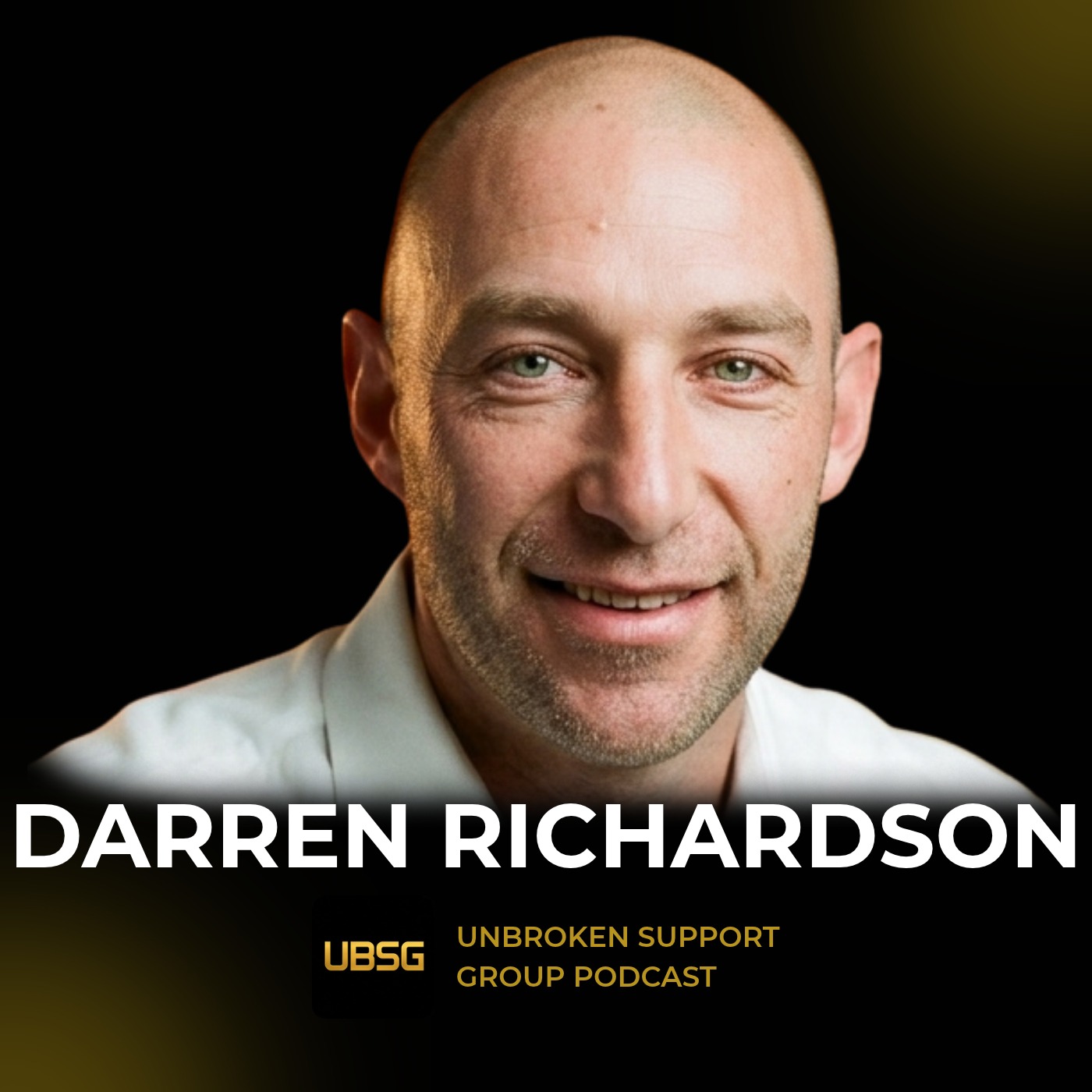
Firefighter to Resilience Coach: PTSD, Purpose & Growth | Darren Richardson

 Apple Podcasts

 Spotify

 YouTube

 Overcast

 Castro

 RSS Feed

 Amazon Music

 Goodpods
What happens when the identity you built your life around begins to break down?
In this episode, Michael Anthony sits down with former firefighter and paramedic Darren Richardson, founder of Ashes to Ascent Coaching. Darren shares his journey through childhood trauma, amputation, life as a first responder, PTSD, alcoholism, identity loss, and ultimately healing.
After 18 years in emergency services, Darren left the fire service facing PTSD, identity loss, and the challenge of rebuilding life beyond the uniform. Through therapy, recovery, and another major amputation, he found new purpose as a resilience coach serving first responders, veterans, and amputees.
Michael and Darren explore healing, purpose-driven business, vulnerability in branding, overcoming fear, and finding a “why” stronger than fame or fast money.
In this episode, you’ll learn:
- Darren’s path from childhood trauma and amputation to becoming a firefighter and paramedic
- The emotional toll of first responder work and the challenge of returning home after traumatic shifts
- How PTSD, alcohol use, nightmares, isolation, and identity loss affected Darren’s life after leaving emergency services
- Why asking for help was one of the hardest and most important decisions Darren made
- How a second amputation became a turning point in Darren’s healing and career transition
- Why lived experience builds trust in coaching, leadership, and service-based businesses
- How to use your personal story to create a more authentic personal brand
- The difference between posting content and building a real business
- Why entrepreneurs must overcome fear of being seen
- How to reframe fear, take action, and keep going through failure
- Why your “why” should be emotional enough to sustain you through hard seasons
Meet Darren Richardson: a mindset, resilience, and mental performance coach, motivational speaker, and founder of Ashes to Ascent Coaching.
Darren spent 18 years in the fire service as a firefighter and paramedic. His story began at 13, when an amputation changed his life forever. Years of answering traumatic calls later, he faced PTSD, depression, and the loss of an identity built around the career he loved. Still, he fought his way back toward the fire service, only to face a second amputation.
Every setback became a turning point, and every loss became a lesson. Today, Darren helps first responders, veterans, amputees, and others rise from their hardest moments, rebuild who they are, and turn pain into purpose.
Connect with Darren Richardson:
- Website: https://www.ashestoascent.com/
- Instagram: https://www.instagram.com/ashes_ascent_coaching/
- Facebook: https://www.facebook.com/people/Ashes-to-Ascent-Coaching/61590616405068/
- Linkedin: https://www.linkedin.com/in/darren-richardson-95532241b
Subscribe for more conversations about childhood trauma, entrepreneurship, healing, mental health, personal growth, and becoming the best version of yourself.
Advertising Inquiries: https://redcircle.com/brands
Privacy & Opt-Out: https://redcircle.com/privacy
Support the Podcast: Become a listed sponsor!
Follow me on Instagram @MichaelUnbroken
Learn more about coaching at https://coaching.thinkunbroken.com
Get your FREE copy of my #1 Best-Selling Book Think Unbroken: https://book.thinkunbroken.com/
Advertising Inquiries: https://redcircle.com/brands
Privacy & Opt-Out: https://redcircle.com/privacy

Support the Podcast: Become a listed sponsor!
Follow me on Instagram @MichaelUnbroken
Learn more about coaching at https://coaching.thinkunbroken.com
Get your FREE copy of my #1 Best-Selling Book Think Unbroken: https://book.thinkunbroken.com/
0:00 [SPEAKER_00]: You know, we all have personal journeys and in our lives the one thing that we have to be willing to do is to change our mind and sometimes in life and business like that means becoming that necessarily only like a newer version of you but becoming the version of you that is required to grow into the person that you want to be and that's no true or then today's guest Darren Richard said. [SPEAKER_00]: who at one point was an incredible firefighter and public service member who now is helping people change their lives forever, and we're going to talk about his personal story, journey, branding, marketing, everything business, and more. [SPEAKER_00]: That said, Darren my friend, welcome to the show. [SPEAKER_01]: Thank you for having me. [SPEAKER_01]: I really appreciate it. [SPEAKER_01]: This is going to be a great great conversation here.
0:42 [SPEAKER_01]: I'm excited. [SPEAKER_00]: Yeah, definitely. [SPEAKER_00]: And one of the things that I loved about your story, your journey is, you know, your, your person who you've done the things like you've put yourself in this position multiple times of following your dreams, figuring it out. [SPEAKER_00]: And even so with a lot of dare I say, [SPEAKER_00]: moments of hard recognition. [SPEAKER_00]: You've had to come out of the other side and be like, you know what? [SPEAKER_00]: I've got to go this route now. [SPEAKER_00]: I'm curious. [SPEAKER_00]: I want to start this. [SPEAKER_00]: Tell us about where you're at today and and how you got here. [SPEAKER_01]: Yeah, so it's been a long journey, a long life of kind of trauma and over the course of all the years, it's been falling down, getting up, falling down, getting up, you know, a diverse story and, you know, it's really like that perseverance, kind of story, the rocky type story.
1:34 [SPEAKER_01]: And now I may mindset resilience, mental performance coach. [SPEAKER_01]: And I work a lot with first responders, veterans, and amputees because I have this first hand experience with them. [SPEAKER_01]: And I think that really resonates with those with that clientele, because I've literally walked in those shoes. [SPEAKER_01]: And so now I do coaching and more entrepreneurship, just want to keep rising. [SPEAKER_00]: Is there any crossover that you've come to discover between your journey of being a fireman and ultimately what you're doing now to be a service at a different pace and different level? [SPEAKER_00]: Absolutely. [SPEAKER_00]: There's definitely crossover.
2:15 [SPEAKER_01]: As, you know, in firefighting, you see a lot of, you see a lot of bad, right? [SPEAKER_01]: You're there for, on the worst day of somebody's life, constantly, so that adds up. [SPEAKER_01]: There's actually a lot of mental health problems being a first responder. [SPEAKER_01]: PTSD is very common. [SPEAKER_01]: And now what I do is I take that from my own experience with PTSD. [SPEAKER_01]: And now I'm coaching. [SPEAKER_01]: I've come out of that journey. [SPEAKER_01]: And now I want to give back. [SPEAKER_01]: So it's the same thing as when I was a firefighter and a paramedic, always wanting to give back. [SPEAKER_01]: Now I just [SPEAKER_01]: wanting, you know, who's dedicated overcoming challenges, but especially those firefighters and those veterans, because they need to help too.
3:04 [SPEAKER_01]: And I feel like if I can help them, they can do a better job helping others. [SPEAKER_01]: So I feel like it's the next level. [SPEAKER_00]: My brother is a firefighter with Wayne Township in Indianapolis. [SPEAKER_00]: My other brother is a retired police officer who now is in the Navy. [SPEAKER_00]: And we come from a service-based family. [SPEAKER_00]: And I don't think people really understand the depths of the impact of that to go out into the world every day to be a service. [SPEAKER_00]: And then have to come home into, [SPEAKER_00]: what you would call it a normal life. [SPEAKER_00]: What was firefighter life like for you and where did the dream to follow that path even start?
3:47 [SPEAKER_01]: Yeah, so I'll start with the dream and basically I grew up in a broken home. [SPEAKER_01]: A child of emotional abuse, my father was an alcoholic, so not to go too deep into that, but [SPEAKER_01]: You learn how to read people, you learn how to read the room very early, you feel small, and by doing that as I was growing up, I wanted to help others because I saw it in me early, and then when I was 13 years old, I had a bolder the size of a car fall on me while I was hiking and crushed my foot.
4:28 [SPEAKER_01]: From there, I needed that emergency services now. [SPEAKER_01]: So that was a horrific injury and it ended up in an amputation of part of my foot. [SPEAKER_01]: But I saw how the rescue operation went. [SPEAKER_01]: I was helped there. [SPEAKER_01]: And that led further and further into firefighting career. [SPEAKER_01]: The rehab that I had to do from the amputation lasted a couple of years. [SPEAKER_01]: So you learn the hard work, you learn that mental resilience from one being a young child dealing with alcoholism in the family, and now the resilience of overcoming a horrific injury. [SPEAKER_01]: You just, you kind of learned how to handle all that.
5:09 [SPEAKER_01]: And in a way, it toughens you up from the inside out. [SPEAKER_01]: Plus, the physical therapy and always trying to be an athlete, wanting to compete, to be normal, quote unquote, normal now, because technically I was an amputee, taking all that to then get in the fire service. [SPEAKER_01]: It was really rewarding. [SPEAKER_01]: It was another, the next challenge to me, getting knocked down back up, it knocked down, get back up. [SPEAKER_01]: where you have to keep challenging yourself. [SPEAKER_01]: It's a dangerous career. [SPEAKER_01]: You're around a lot of people who... [SPEAKER_01]: They're very similar to you. [SPEAKER_01]: With that nature, it's almost like an athletic team.
5:51 [SPEAKER_01]: Everyone's kind of competing to be a little bit better. [SPEAKER_01]: And that was kind of my nature because of all this resilience. [SPEAKER_01]: And then getting into firefighting to help others was great. [SPEAKER_01]: But yeah, you do definitely take a, it takes a toll on you and what I didn't notice is my identity had started to change a little bit to speak to your question on what was it like in husband and dad one minute and firefighter the next. [SPEAKER_01]: It was difficult. [SPEAKER_01]: I struggled making that shift and a lot of first responders do. [SPEAKER_01]: It's really hard. [SPEAKER_01]: There were times where I would pull up after a 48 hour shift and sit in the driveway for 10 minutes just staring saying, how am I supposed to be dad to two [SPEAKER_01]: after what I just went through, what I just saw, what I had to do, it was very difficult to turn that on and off and be family man, just to go back to work a few days later and turn it back on to be in that firefighter, that fireman, that it was great, there was a lot of fun in the firehouse, it's a bunch of big kids running around.
7:14 [SPEAKER_01]: But at the same time, you had a job to do [SPEAKER_01]: quick on the fly changes was difficult at times. [SPEAKER_00]: When when did you decide it was time to walk away? [SPEAKER_00]: Because I I look at a lot of service members, whether you're a firefighter, M.T. [SPEAKER_00]: police, military, whatever, and you know, I think that there's kind of this stigma about the walking away. [SPEAKER_00]: But then there's also the side of it where that's your identity, you know, and you know, we're going to talk a little bit more about brand today and for me, like being inside of what I had built for a decade, becoming the number one trauma coach in the world, this podcast being one of the number one shows on the world.
7:59 [SPEAKER_00]: writing multiple books, being that guy on stage, all those things that all the accolades that came along with it, you know, when I made the decision to walk away, it was one of those things where, for this period of 12, 18 months, it almost felt like a bit of an identity crisis, right, because I was so, [SPEAKER_00]: entwined into what I had built because for years it was everything. [SPEAKER_00]: It was the sun, the moon, the stars revolved around this idea of like this is the world that I exist. [SPEAKER_00]: And of course, that was my path and that was what I chose. [SPEAKER_00]: But one day I woke up and I had always said for a long time if I ever wake up and I don't want to do this anymore, I won't. [SPEAKER_00]: And I made that decision and it still took another year before I fully pulled myself into this next place where I was like, [SPEAKER_00]: OK, now I'm going to focus on business.
8:49 [SPEAKER_00]: I'm going to work with entrepreneurs. [SPEAKER_00]: I'm going to work with leaders, executives. [SPEAKER_00]: We're going to help them grow businesses, effectively do what I had done. [SPEAKER_00]: And it took me a lot of conversations with friends, a lot of conversations with mentors and people who were peers, and just being like, OK, how do you do that? [SPEAKER_00]: And eventually what I came to realize is like, well, you just do it. [SPEAKER_00]: There's not really any other way to it. [SPEAKER_00]: But I'm not, say, I mean, to some capacity, yes, that there's the element of saving lives because I'd have people constantly be like, do you save my life, you change my life, whatever that might be. [SPEAKER_00]: But it was never like, hey, I'm literally in the fire. [SPEAKER_00]: No pun intended.
9:29 [SPEAKER_00]: So I'm wondering, how did you make that transition? [SPEAKER_00]: And how did you get to that place of that decision? [SPEAKER_00]: to be willing to step into what's next? [SPEAKER_00]: What kind of transpired in your career and especially in your life that led you down this path? [SPEAKER_01]: Yeah, you know, similar to your story. [SPEAKER_01]: Well, well, I loved being a firefighter and I thought I was going to do that. [SPEAKER_01]: That was my career. [SPEAKER_01]: That was my dream. [SPEAKER_01]: I was set for life. [SPEAKER_01]: I [SPEAKER_01]: Like I said, it, the calls slowly added up the traumas, you know, I, I absorbed a lot of them. [SPEAKER_01]: What I didn't do is I was very good because this is all I knew of stuffing things down.
10:16 [SPEAKER_01]: And I, [SPEAKER_01]: I started doing that. [SPEAKER_01]: So I would stuff these calls way down deep. [SPEAKER_01]: I would never talk about them. [SPEAKER_01]: There really wasn't a lot for mental health at the time in the fire service. [SPEAKER_01]: There's a stigma of if you ask for help, you're going in the office or you're done. [SPEAKER_01]: That kind of personality wasn't really supported or it wasn't very well supported to ask for help because I'm the helper. [SPEAKER_01]: I solve the problems. [SPEAKER_01]: I'm the one that's supposed to help you. [SPEAKER_01]: And when I first got in the fire service, it really was a suck it up kid. [SPEAKER_01]: This is how it is culture.
10:57 [SPEAKER_01]: So you learned from your mentors that way. [SPEAKER_01]: So it took a while. [SPEAKER_01]: I was in the fire service for 14 years and as a first responder, 18 years, I was a paramedic for some time before that as well. [SPEAKER_01]: The choice to give it up, I really noticed changes in myself. [SPEAKER_01]: I was short with my kids. [SPEAKER_01]: I was not the best family man anymore. [SPEAKER_01]: I was constantly tired, I was bitter, who someone who had grown up from a life of trauma, who would always had a good attitude no matter what. [SPEAKER_01]: And then I would look in the mirror and I didn't like who I'd become.
11:44 [SPEAKER_01]: And really to be honest, it would start off as, oh, well, I'm on my four days off. [SPEAKER_01]: I can have some beers with buddies and then I noticed, well, I need a little bit a couple more. [SPEAKER_01]: Then it, I was having nightmares. [SPEAKER_01]: So I'd have a few drinks to help me sleep. [SPEAKER_01]: That continued on to where I needed alcohol to sleep. [SPEAKER_01]: Again, not being a good husband. [SPEAKER_01]: There was a period of time where [SPEAKER_01]: My mind would kind of shift when I was on calls. [SPEAKER_01]: I started seeing my kids' faces on other kids from injuries. [SPEAKER_01]: I would just take my bucket was full.
12:26 [SPEAKER_01]: I was taken too much home to where it was not me anymore. [SPEAKER_01]: I was having trouble in my marriage. [SPEAKER_01]: I was at the same time, when you have a life, [SPEAKER_01]: you're handling daily life as well. [SPEAKER_01]: That was doing construction on my house, doing a remodel. [SPEAKER_01]: You know, we had a mortgage to pay. [SPEAKER_01]: We had all the stressors of life, and then I had that compiled on top of it. [SPEAKER_01]: To where there was one day, I had it, you know, or a series, a season, I guess, of really bad traumatic calls, a lot of them dealing with children, and I had kids at home. [SPEAKER_01]: So I bottled it up.
13:06 [SPEAKER_01]: There was a time where, [SPEAKER_01]: my wife ended up saying we need to we need to figure something out. [SPEAKER_01]: She is an ER nurse at the time as well. [SPEAKER_01]: So she's a busy trauma hospital. [SPEAKER_01]: So we're both dealing with this. [SPEAKER_01]: And we didn't tell each other a lot of the calls, which is a huge mistake because that could have been a great outlet. [SPEAKER_01]: But we didn't. [SPEAKER_01]: From there. [SPEAKER_01]: It just kept getting worse. [SPEAKER_01]: She decided, maybe we should move, maybe I want to get out. [SPEAKER_01]: She wanted to do something else as a nurse. [SPEAKER_01]: So we decided to move to Cordellaine, Idaho. [SPEAKER_01]: This was in the Denver area. [SPEAKER_01]: We moved to Cordellaine and started over.
13:51 [SPEAKER_01]: The problem I had, which you had mentioned, is I had identified as a firefighter and as a paramedic. [SPEAKER_01]: Now we left, moved, I had no friends. [SPEAKER_01]: I had one family member that lived up here that we had visited. [SPEAKER_01]: I didn't have a job, I was no longer a firefighter. [SPEAKER_01]: So that identity crisis was huge, just like you said. [SPEAKER_01]: I didn't know what to do anymore. [SPEAKER_01]: And I really didn't see that coming. [SPEAKER_01]: The funny thing is, is I didn't look in the mirror [SPEAKER_01]: we knew when guys retired from the fire service or from you know from being any any of the services statistically they struggle because their life is in that firehouse their life is in the military or as a police officer their life is surrounded by that that was my fire family and now I had abandoned and I left so I didn't know who I wasn't in [SPEAKER_01]: And it was tough, it was very hard.
14:53 [SPEAKER_01]: It actually took, at the time I didn't know I had PTSD, but I had every sign. [SPEAKER_01]: When we moved, all of my symptoms actually got worse. [SPEAKER_01]: I was drinking more because now I was alone. [SPEAKER_01]: My wife started a new job. [SPEAKER_01]: She was making friends, my kids are in school making friends, and I'm here alone. [SPEAKER_01]: Without much to do, I worked as a handyman for a while. [SPEAKER_01]: but not a whole lot to do so that drinking continued, it got worse, the thoughts, the suicidal thoughts, kept getting worse. [SPEAKER_01]: All of this just compiled, and honestly it took me two years to ask for help.
15:33 [SPEAKER_01]: Because I still had that firefighter mentality of I can fix this. [SPEAKER_01]: I'm strong enough. [SPEAKER_01]: I can hold on this together, all of this together. [SPEAKER_01]: And the dumbest thing I ever did was wait. [SPEAKER_01]: And beyond us, the hardest thing I've ever done in my life was walking into a therapist office and asking for help. [SPEAKER_01]: After everything I've done and everything I've gone through, the horrific trauma is the personal trauma. [SPEAKER_01]: All of that, saying the word I need help, was the hardest thing, which sounds so stupid, but it was true. [SPEAKER_00]: Mm. [SPEAKER_00]: Yeah, I did, I get that, you know, [SPEAKER_00]: I mean, we get so wrapped up into it and there's so much strain that we need to navigate and deal with mentally, emotionally, spiritually, professionally.
16:22 [SPEAKER_00]: And this is why you do see so many people who are in service take their lives. [SPEAKER_00]: I mean, it's just such a huge weight to carry. [SPEAKER_00]: And [SPEAKER_00]: And I see the world changing, obviously, but when we make that decision, hey, it's time, I found for me that that was one of the most difficult aspects of it because now I had to decide who I wanted to become next, right? [SPEAKER_00]: And I think when I look at it through the scope of business, the thing that I often sit in is it's those stories that we tell that are such a big part of our brand and who we are. [SPEAKER_00]: And, you know, I think about, you know, what the space that you're in, if you don't go and share that story, and you don't tell this to whether it be podcasts, social media, blogs, emails, newsletters, whatever it might be, you can't go and serve that person who is waiting for you.
17:15 [SPEAKER_00]: And I learned a long time ago that the best way to serve the people who you're met to serve is you've got to go ahead and tell your story every day. [SPEAKER_00]: But that's so hard because something that really starts with you telling yourself the truth. [SPEAKER_00]: When you started to walk down this transition, I'm curious what inspired you to walk down the path of being like, you know, I'm going to coach in this space for the firefighters for the service members for these people, I mean, you know, obviously it's a, it's a bit of a natural transition, but you still have to decide that as opposed to I'm going to be a handyman. [SPEAKER_00]: How did you land there? [SPEAKER_00]: What's the inspiration behind that?
17:56 [SPEAKER_01]: It conspired over a little time. [SPEAKER_01]: I started seeing in a new light after the therapy. [SPEAKER_01]: I started healing, but I realized that [SPEAKER_01]: I could overcome all this. [SPEAKER_01]: So ironically, actually, I wanted to get back into firefighting. [SPEAKER_01]: I had healed. [SPEAKER_01]: I had conversations with my therapist like is this truly a good idea to go back to this dark spot or potentially as dark spot. [SPEAKER_01]: But I felt like I had done the work. [SPEAKER_01]: So I was actually applying and going through testing processes again in the Cordoid Lane area, Spokane, Washington area, to be a firefighter again.
18:38 [SPEAKER_01]: And while I was doing that, I knew, again, what it took to get through a fire academy in my 20s. [SPEAKER_01]: Now, at this time, I'm in my mid 40s, testing against literally, kids literally half my age. [SPEAKER_01]: So I started going to the gym more and that made me feel even better, right? [SPEAKER_01]: Get the endorphins running, get back to where I was at, but I was training really hard. [SPEAKER_01]: And I started having pain in my foot again. [SPEAKER_01]: the same one I had a previous Samutation Earth. [SPEAKER_01]: So to back up that previous injury, I ended up losing two toes and a ton of skin grafting where the original injury was actually their potential of losing my lower leg.
19:21 [SPEAKER_01]: But, damn, I would be able to heal very well. [SPEAKER_01]: So, a portion of my small portion of my foot, really. [SPEAKER_01]: But I started having pain again recently. [SPEAKER_01]: So, I saw a doctor thinking they're just gonna have to take the remaining toes off, no big deal. [SPEAKER_01]: I'm training, I'm tough enough, I can handle this. [SPEAKER_01]: And also, mentally, I was in a good spot to where I felt I could handle that. [SPEAKER_01]: But the surgeon looked at it and said, it's not that simple. [SPEAKER_01]: They because of all the trauma that it had that I had in that foot, the scar tissue, the way they had to reconstruct it, it wasn't just loose toes. [SPEAKER_01]: It was actually loose half of my foot, a transmeditarsal amputation.
20:04 [SPEAKER_01]: And, [SPEAKER_01]: if that didn't take, Plan B was below the knee. [SPEAKER_01]: Amputation, damn. [SPEAKER_01]: And so from there, again, I had gone through the healing. [SPEAKER_01]: I had gone through his transformation. [SPEAKER_01]: But I'm right back to that 13-year-old kid who had that same scenario. [SPEAKER_01]: Well, we could be might lose your foot, you might lose your leg. [SPEAKER_01]: But what I had done is I had a new identity now. [SPEAKER_01]: I was no longer that traumatized kid. [SPEAKER_01]: I was no longer a firefighter anymore. [SPEAKER_01]: I was me. [SPEAKER_01]: I was Darren. [SPEAKER_01]: I was a father. [SPEAKER_01]: I was a husband. [SPEAKER_01]: From that, I was okay.
20:45 [SPEAKER_01]: We went through the amputation. [SPEAKER_01]: And that's really when I realized maybe I don't want to be a firefighter. [SPEAKER_01]: But there's something bigger on the horizon for me. [SPEAKER_01]: It's to help those who are helping others. [SPEAKER_01]: And to be quite honest, I got the idea from my wife, who is she's a nurse, but she's also a holistic wellness coach. [SPEAKER_01]: And so I saw the transitions that she was helping with her clients and these transformations and doing so good going from being an ER nurse to also coaching and how that lit her up.
21:28 [SPEAKER_01]: And it was so rewarding and then these clients were doing great it hit me that well I can do that I have this story I have this experience. [SPEAKER_01]: I want to I want to serve at a higher level and it's to help the helpers train the trainers right and so that's what I did that's when I chose I need to be a coach and really my passion again is first responders veterans and amputees because I've walked through that fire literally I have worn those shoes and so who better. [SPEAKER_01]: then someone who's gone through it. [SPEAKER_01]: I find, and I would assume with you, when you were coaching, people trusted you because you had gone through it.
22:14 [SPEAKER_01]: You had, you had experience. [SPEAKER_01]: A lot of people just don't trust someone who read a book and took a test. [SPEAKER_01]: They want this lived experience. [SPEAKER_01]: They want to be able to really relate with somebody to help them to, [SPEAKER_01]: you know, to have that experience. [SPEAKER_01]: And so that's really where I said, no, this is got to be bigger. [SPEAKER_01]: This is the target audience I want. [SPEAKER_01]: Um, the sticking point, the difficulty is breaking in to that group who is, I don't need help. [SPEAKER_01]: I can fix myself. [SPEAKER_01]: that's also the same, which is that I look at as a challenge. [SPEAKER_01]: Well, I thought the same, I'm going to break through that mold.
22:56 [SPEAKER_01]: And it gives me drive, it gives me passion. [SPEAKER_01]: It's it's an extra little challenge, just that I really want to take on. [SPEAKER_01]: So I did it. [SPEAKER_00]: Yeah, you're spot on, especially about the the trust in the experience and the thing that I've learned over the years is that so much of it really does come from the proof it's like where your receipts, you know, I could I mean I've had firefighters first responders different people come through my programs over the years, but if I hadn't been in the trenches of being the guy who's going to go and tackle this thing in front of me from growing up and arguably one of the most abusive homes you could imagine.
23:36 [SPEAKER_00]: my mother cutting my finger off, being homeless as a kid, all of these things I've shared many times over the years. [SPEAKER_00]: How do I sit with the guy who's mother cut his throat or the guy who's mother or stepdad or locked him into literal cages? [SPEAKER_00]: You know, when it's like, I understand that level of pain. [SPEAKER_00]: I don't know what it's like to be doing chess compressions and lose a child in my arms. [SPEAKER_00]: Right. [SPEAKER_00]: I don't know that you do, but I mean, you know, that's the thing, right? [SPEAKER_00]: And it's like that that related ability is ultimately in from a business perspective, the thing that becomes our most important tool. [SPEAKER_00]: And I think people get caught up in this because they won't share the vulnerability of the, this is where I mad or my starting point or I've been doing this for a few years, or they won't share the, the really hard truths about it.
24:26 [SPEAKER_00]: But, [SPEAKER_00]: When I was in the beginning, I'm now heading towards my 18th year as an entrepreneur. [SPEAKER_00]: You know, and I would argue that my skills have increased to the point where business is easier, but at the same time as you grow in scale business, it becomes even harder. [SPEAKER_00]: Like, it's constantly more difficult on a daily basis, even though simultaneously it's easier. [SPEAKER_00]: Right? [SPEAKER_00]: Bishop TD Jakes, this amazing speaker who I've known for many years has always said [SPEAKER_00]: And I think about that in regard to business. [SPEAKER_00]: So, you know, one of the things that I see all the time is that it's really in our stories that we get to talk to our target audience, but I think that one of the things people really must understand about branding is how to do that.
25:14 [SPEAKER_00]: And I'm curious for you, especially because you talked about this being a new challenge, I know one thing to be true about business, marketing promotion is first before anything. [SPEAKER_00]: What do you think is the biggest misunderstanding that people have about marketing and branding that's been a challenge for you to learn that you now understand really deeply? [SPEAKER_01]: Yeah, I think you know starting a new business because I've I've had [SPEAKER_01]: I've had four businesses now, and a couple of failed, and it was something I didn't have a heart in. [SPEAKER_01]: I didn't have a passion for. [SPEAKER_01]: It was really a side hustle. [SPEAKER_01]: So I didn't do much marketing and branding.
25:55 [SPEAKER_01]: I didn't really understand what branding was, and I think that's the biggest failure. [SPEAKER_01]: With this, because with those other businesses, I didn't really have much tie to it. [SPEAKER_01]: To have have closed down they weren't me because I understand where my heart my soul my passion everything is in This you know helping these first responders or this this group is coaching That's the brand itself and like you had mentioned my story is actually my brand [SPEAKER_01]: It's just telling the story. [SPEAKER_01]: Now I can shift it a little here and there, do some marketing, kick out some social media.
26:39 [SPEAKER_01]: But everybody's doing that. [SPEAKER_01]: That's the way it has to be now. [SPEAKER_01]: If you're not on social media and you own a business, you're going the wrong way. [SPEAKER_01]: That's the way the world is going. [SPEAKER_01]: I think that just having the awareness, that's the way you have to get out. [SPEAKER_01]: So you have to do these marketing steps, these branding. [SPEAKER_01]: The hardest part for me about getting out in the world of branding is the subjects, the target subjects that I'm working for, are really hard to grasp. [SPEAKER_01]: With different businesses, you have a product, you have a buyer.
27:21 [SPEAKER_01]: You connect them, and that's how business works, right? [SPEAKER_01]: You have someone who makes a product, someone who needs that product, and that's the sale. [SPEAKER_01]: With coaching, it's a little different because I don't necessarily have my product as myself or the client, the client needs my coaching. [SPEAKER_01]: So really, they're needing me, and that's how I brand it is, [SPEAKER_01]: I'm specific to this service. [SPEAKER_01]: There are hundreds, there are thousands of coaches out there. [SPEAKER_01]: There's one of me. [SPEAKER_01]: There's one of you that's what they're looking for. [SPEAKER_01]: And that's kind of how I bring it to their attention is they're looking for a specific service.
28:05 [SPEAKER_01]: They can pick any coach out there. [SPEAKER_01]: But they find something in me that resonates with them. [SPEAKER_01]: And really, it starts with that honesty and that vulnerability. [SPEAKER_01]: the understanding, and it's that vulnerability, which is really what I use, but it initially was hard to kind of figure that out because, yeah, there's just a lot of people out there that try to sell something, but they're not honest with themselves. [SPEAKER_01]: I think that's the biggest key is honest to yourself, just like you said. [SPEAKER_00]: Yeah, having your heart in it, I mean, that's so true. [SPEAKER_00]: And I think that's true of business across the board.
28:46 [SPEAKER_00]: And you know, I don't know any successful entrepreneur, none of my peer group, none of my friends, none of my mentors to people I look up to in the world, even none of us got it right the first time. [SPEAKER_00]: I mean, I have crashed and burned seven different companies, just trying, right? [SPEAKER_00]: I've had a couple of hit that have gone really, really well for me, but you know what, it's all of those lessons that come along with it and you mentioned your heart and I think that's such a big part of it because [SPEAKER_00]: That's that's tied to this I did about like have your why and it's the it's the thing that keeps you going when it's Thursday night at 10 o'clock and you're still going and it's Sunday morning at one in the afternoon and it's Wednesday at 6 a.m. and you're like, okay, I got to go do this.
29:33 [SPEAKER_00]: And I think that's one of the big misconceptions that people have about starting businesses or about getting into this game as it's like, this is not easy. [SPEAKER_00]: It's certainly not for the faint heart and it is a challenge. [SPEAKER_00]: But if you screw up this marketing message and branding side of it, you will never be successful. [SPEAKER_00]: Like if you look at some of the best businesses in the world, you know, they're spending, [SPEAKER_00]: hundreds of millions of dollars a year on marketing and branding. [SPEAKER_00]: And their companies we all know, the Pepsi's, the Coca-Cola's McDonald's Cadillac, you name it, you know, the prescription drug companies, you know, the list goes on. [SPEAKER_00]: These guys spend so much money on this stuff and they, their experts and masters at the marketing in the brand, but they all have one thing in common.
30:20 [SPEAKER_00]: They're offering you a solution to the problem. [SPEAKER_00]: And so the problem [SPEAKER_00]: exists regardless of what industry you're in. [SPEAKER_00]: I believe now that above everything else that I do, I consider myself to be a marketer first. [SPEAKER_00]: I believe that I'm a pretty damn good copywriter, I'm a pretty great salesperson, but I'm a marketer above all because I've learned that being able to talk to people at where they are is the business, especially if you're in coaching consulting, [SPEAKER_00]: I think people get caught up in the space of feeling like maybe they won't be dare I say professional if they have vulnerability and heart and they tell their story.
31:08 [SPEAKER_00]: How have you navigated that journey for yourself and what would you tell to the people who they feel stifled by this idea of like I've got to go and share with the world my deepest darkest secrets? [SPEAKER_01]: I think a lot of people can, they can resonate with vulnerability, but they have to open it up for themselves. [SPEAKER_01]: It's tricky, you know, because like we said before, if you're not honest with yourself, you're not gonna get the clients that you need, the customers that you want. [SPEAKER_01]: And do you want to work with a client who is not being honest with themselves?
31:50 [SPEAKER_01]: So that kind of goes both ways. [SPEAKER_01]: In the coaching world or the consulting kind of world, you have to develop a relationship. [SPEAKER_01]: That relationship is really what that transaction is. [SPEAKER_01]: There has to be trust on both ends. [SPEAKER_01]: Yeah, like, it's hard to open someone up if they're not ready to open. [SPEAKER_01]: And if I look back at my previous businesses, a nut, you know, I got into a praising for a while, right? [SPEAKER_01]: It wasn't me. [SPEAKER_01]: I did it for the wrong reason and it went nowhere.
32:34 [SPEAKER_01]: It's because I didn't come across as [SPEAKER_01]: believable in a sense. [SPEAKER_01]: I was very professional. [SPEAKER_01]: I did the education. [SPEAKER_01]: I got the licensing. [SPEAKER_01]: I got, I went through all the steps. [SPEAKER_01]: I opened the business the right way. [SPEAKER_01]: I contacted the realtor, you know, that I did everything right. [SPEAKER_01]: But there was a piece missing. [SPEAKER_01]: And the piece missing was the truth and the heart. [SPEAKER_00]: Right in note here, because I think that missing Pete, like that's the place where most people are stuck. [SPEAKER_00]: They're like, I have these stories, they'll sit and they'll tell people, but they won't tell their target audience. [SPEAKER_00]: They'll tell the guy at the bar, they'll tell... [SPEAKER_00]: the person, you know, their therapist is Lord knows I've done that too.
33:18 [SPEAKER_00]: But they won't put it out into the world. [SPEAKER_00]: There seems to be this disconnect from them understanding that the relationship starts with the first piece of content that people see about you. [SPEAKER_00]: And I think that relationships are such a big part of how we communicate because when you are a personal brand, which, I mean, realistically, every company in the world has started this shift to becoming personal brand. [SPEAKER_00]: We saw this this past summer when you had the McDonald's CEO, the Burger King CEO, the RBCO all eating their food. [SPEAKER_00]: Now, needless to say, the McDonald's guy made us question a few things, but like you see this and you go, wait a second. [SPEAKER_00]: you have to be the face of your company in 2026, 2027, 28, probably, you know, and even people are attempting to leverage AI at a high level today, but now we're seeing and everybody knows AI content, AI Slop as we're calling it.
34:14 [SPEAKER_00]: You see, the M-Dashes and everybody's ads look the same and the menu at the restaurant looks the same and you're like the creativity is dying. [SPEAKER_00]: How do you [SPEAKER_00]: How do you intertwine your story and these relationships and be the face of the brand in the space of a vote of like, how do we get people to that? [SPEAKER_00]: Right? [SPEAKER_00]: What are some tools that we can give people who are listening right now? [SPEAKER_00]: They're stuck. [SPEAKER_00]: They're like, I'm a business owner. [SPEAKER_00]: Maybe I'm a month in, maybe I'm 10 years in. [SPEAKER_00]: I don't know, but I'm still struggling to get to that next level in my marketing. [SPEAKER_01]: Yeah, that's that's a great question. [SPEAKER_01]: That's a difficult one. [SPEAKER_01]: I think [SPEAKER_01]: But for people that are, you know, those, that business owner that's, that's just stuck.
35:01 [SPEAKER_01]: The AI is a great tool, don't get me wrong. [SPEAKER_01]: But if you're doing the same thing everyone else is doing, you're going the wrong way because that's actually taking from your brand. [SPEAKER_01]: I, I want to be an individual. [SPEAKER_01]: I want to stand out. [SPEAKER_01]: If everyone's business had the same three colors and the same AI picture, you couldn't [SPEAKER_01]: I want to be the one that stands out. [SPEAKER_01]: Some of the biggest names out there who have their businesses, a lot of them, it's their name. [SPEAKER_01]: You look at, I'm going to use like Tim Tibo, as an example.
35:43 [SPEAKER_01]: His branding power is insane. [SPEAKER_01]: he is more famous now and done more now than when he was a professional football player. [SPEAKER_01]: When he before he played college ball, I entirely agree. [SPEAKER_01]: He was a Heisman trophy winner. [SPEAKER_01]: He went played pro. [SPEAKER_01]: You know, he a phenomenal player didn't quite make the grade to be honest. [SPEAKER_01]: I love the guy. [SPEAKER_01]: He played very well. [SPEAKER_01]: He got into sports casting afterwards. [SPEAKER_01]: He did all these things, but compared to what he's doing now in the team, Tim Teebo foundation, he is getting a global scale.
36:24 [SPEAKER_01]: His name is everywhere, bigger for child trafficking, much bigger cause than the NFL, much bigger cause than college football. [SPEAKER_01]: He's an icon in that, and it's his name. [SPEAKER_01]: it's because what he's doing. [SPEAKER_01]: That's his brand. [SPEAKER_01]: There's hundreds of other people that are doing that. [SPEAKER_01]: There's only one Tim Tibo. [SPEAKER_01]: And you know, that's what needs to happen. [SPEAKER_01]: You look at companies before branding was big. [SPEAKER_01]: that they all went under. [SPEAKER_01]: All these big companies that used to be huge, seers, circuit city, all of these. [SPEAKER_01]: There was not branding at the time, but they're all, they're gone, right?
37:05 [SPEAKER_01]: The ones that are surviving, the ones that are growing now are the person behind it. [SPEAKER_01]: They're putting their face in front. [SPEAKER_01]: It's no longer the idea that there's a private owner that nobody knows, but they have the giant billboard in front. [SPEAKER_01]: I think that's going away, I think eventually that business owner is going to have to step into that store personally and help those customers. [SPEAKER_01]: That's where I see some of this going. [SPEAKER_00]: Yeah, and you know, it's funny, his name, I'm going to have, I literally, I'm going to Google this in real time. [SPEAKER_00]: The Starbucks founder would literally go into stores every single day, constantly to make sure that their customers were being served at the highest level.
37:49 [SPEAKER_00]: You know, and that's one of those, Jerry Baldwin. [SPEAKER_00]: You know, and that's one of those things where you look at this, and I'm sure, I know there are a couple. [SPEAKER_00]: And it's one of those realities where you have to be in the business, touching elements of it. [SPEAKER_00]: You have to be the person that people go, oh yeah, I need coaching in this space. [SPEAKER_00]: I am a service member of a firefighter EMT, maybe I have an amputee, Darren's my guy, right? [SPEAKER_00]: For me, people who are building online businesses using podcasting, they come to me in what we do with entrepreneurs in podcasting, which is a part of our brand.
38:29 [SPEAKER_00]: Because I'm putting myself out there every day going, hey, this is what I do. [SPEAKER_00]: This is how I would do it. [SPEAKER_00]: These are my mistakes. [SPEAKER_00]: This is the support I give my clients. [SPEAKER_00]: We have [SPEAKER_00]: You know, we have a giant mastermind coming to the city here in a few weeks where I've got all of my customers coming into a real space together. [SPEAKER_00]: We're going to do a weekend mastermind together. [SPEAKER_00]: And that requires my attention, my energy, my face, the advertising, the the marketing. [SPEAKER_00]: Now, of course, there's, it doesn't always have to be you. [SPEAKER_00]: I think that that can be exhausting, trust me. [SPEAKER_00]: I know. [SPEAKER_00]: But there is only one you. [SPEAKER_00]: And when you're building brand in the coaching consulting space, and it's not just the social media, like that stuff is not building a business.
39:12 [SPEAKER_00]: I know people who have millions of followers online who are dead broke because they don't understand what that means to evolve beyond that. [SPEAKER_00]: Let's talk about like this idea about marketing message real quick for a second because, you know, we're talking about some things that I think are really important and Tibo, like I wrote this down, his heart is the thing that has driven him. [SPEAKER_00]: He's spoken in front of Congress. [SPEAKER_00]: He's saved. [SPEAKER_00]: thousands of lives like I you see his social media content he's either the nicest guy in the world or the nicest guy in the world Like no one ever has anything bad to say about Tim Teebo, you know what I mean I mean we all have skeletons obviously, but you know, you see that you go, okay Well, what does this really mean to put my message out there?
39:53 [SPEAKER_00]: I think it starts with heart I think you're spot on there. [SPEAKER_00]: I think that's the missing piece. [SPEAKER_00]: I think that build relationships and then beyond relationships I think that people get lost in this idea [SPEAKER_00]: that vulnerability is bad. [SPEAKER_00]: So we've covered those three bases. [SPEAKER_00]: How do you start to put that stuff all together though? [SPEAKER_01]: Right. [SPEAKER_01]: I think, you know, I'm going to veer off a little bit. [SPEAKER_01]: I want to say how we hit said, you know, you have to have the heart. [SPEAKER_01]: You mentioned earlier, you have to have the [SPEAKER_01]: that's the key and you know there's a saying you're why should make you cry that's how passion that you need to be in it and that that comes out in your brand that that comes out through you now as far as marketing there's hundreds of ways to market you could take out ad space you know [SPEAKER_01]: online, you know, it used to be little flyers, paper in the neighborhoods.
40:57 [SPEAKER_01]: You can still do that. [SPEAKER_01]: It's still, it's a, it's a, it works. [SPEAKER_01]: Um, but in today's day and age. [SPEAKER_01]: Yeah, you need online presence. [SPEAKER_01]: I, I believe you do just to be out there in scene. [SPEAKER_01]: But the marketing still comes from the, the person, the brand, right? [SPEAKER_01]: I can go out there and offer. [SPEAKER_01]: Hey, free coaching sessions for a month. [SPEAKER_01]: But is someone going to take me up on that? [SPEAKER_01]: It has to tie directly into your brand. [SPEAKER_01]: They have to feel it. [SPEAKER_01]: So the next step, yeah, of course, you have to get out there and hit the streets and market. [SPEAKER_01]: Paid marketing is a good way to do it, because it's all AI.
41:41 [SPEAKER_01]: I mean, you can just kind of set your thing and pay for it. [SPEAKER_01]: But your business also has to have enough income in to be able to afford it. [SPEAKER_01]: Yes, it's a key part, marketing still has to be in the top, you know, the top three things that you have to be doing for your business, you know, that being said, I think, [SPEAKER_01]: Yeah, you just have to integrate it. [SPEAKER_01]: It has to be done. [SPEAKER_01]: The struggle I see with smaller businesses, starting off early marketing was tough because you need a marketing budget. [SPEAKER_01]: You know, at some point you need to scale. [SPEAKER_01]: Now you're scaling, now you're hiring more employees, now you need a bigger budget.
42:24 [SPEAKER_01]: The end of the day, your business has to bring in money more than you spend or the business goes under. [SPEAKER_01]: I've experienced it. [SPEAKER_01]: you've experienced it, that's the difficulty in the balance, but yes, to have a business where you don't market, what are you doing? [SPEAKER_01]: Yeah, what amount is great, but that's still a form of marketing and it just takes longer. [SPEAKER_00]: I see this all of the time, one of the big things that inspired me to want to go and build unbroken business support group and create this container of helping entrepreneurs build grow and scale their businesses was I just realized that one of the things people actually don't have is support.
43:08 [SPEAKER_00]: They think that there's a trophy at the end of being a solo Pnewer. [SPEAKER_00]: I do not think that way. [SPEAKER_00]: I have multiple employees across multiple companies. [SPEAKER_00]: I'm like, who can do this stuff for me? [SPEAKER_00]: And in the beginning, like nobody can pick up this silly little phone and record a real and tell a story about the company except me, but people get caught up in the fear. [SPEAKER_00]: And then they label fear as procrastination, right, when really what it is, they're scared to be seen. [SPEAKER_00]: And I think that's one of those things that is probably preemptive of all the marketing. [SPEAKER_00]: Because, yes, I agree with you. [SPEAKER_00]: Eventually, I mean, we spend tens of thousands of dollars a week on marketing.
43:50 [SPEAKER_00]: And we do all these other things. [SPEAKER_00]: But there's still this part of like the day-to-day where organic counts, it does at the minimum for building community and [SPEAKER_00]: But at the maximum, if you're good at it, you can get people to convert. [SPEAKER_00]: And I don't think building a business as an influencer, unless you're in the 001% is probably in most people's future. [SPEAKER_00]: Like, even like, I look at probably my favorite creator right now is guy named Druski. [SPEAKER_00]: I don't know if you've heard of him or not, but he makes the most insane clips. [SPEAKER_00]: He's like, if Dave Chappelle was in 2026, like the dude's unbelievable, we funny. [SPEAKER_00]: But for every one of him, there's literally 500,000 other people who are trying who will never be that and they're imitating and instead of like putting themselves out there and being them, they're caught up in this fear of being seen and not being thought of like, I see this so often with entrepreneurs or like, but I'm not at that level yet.
44:51 [SPEAKER_00]: And the thing that I always think about you only have to be one step ahead of those people that you're serving. [SPEAKER_00]: How do you move through this? [SPEAKER_00]: Like how do you move through the fear and the procrastination and that part where you're like the getting ready to get ready? [SPEAKER_00]: How do you actually really get yourself to put yourself out there, Darren? [SPEAKER_01]: Yeah, it's a tough one, right? [SPEAKER_01]: If you're takes over, it does. [SPEAKER_01]: And we all have it. [SPEAKER_01]: It's part of the human body. [SPEAKER_01]: It's a protective mechanism, right? [SPEAKER_01]: But as a business owner, as an entrepreneur, there's some things you have to get over, right? [SPEAKER_01]: When I was a firefighter, there were times I was scared. [SPEAKER_01]: But you have to rely on your training.
45:33 [SPEAKER_01]: You have to go back and say, why am I here? [SPEAKER_01]: What is my goal? [SPEAKER_01]: What is my purpose? [SPEAKER_01]: Where's my heart at? [SPEAKER_01]: That helped me get over some fear. [SPEAKER_01]: Trusting that this is the way to do it. [SPEAKER_01]: This is my opportunity. [SPEAKER_01]: If you're scared to act and you never act or you procrastinate, it only ends in one, [SPEAKER_01]: one way. [SPEAKER_01]: It ends one way. [SPEAKER_01]: If you don't ever make that move, you stop. [SPEAKER_01]: The world keeps spinning, the world keeps going. [SPEAKER_01]: You have to take that step. [SPEAKER_01]: And a lot of this fear never truly comes true.
46:14 [SPEAKER_01]: You know, there's some crazy statistic that says most of things that you actually think [SPEAKER_01]: So if you take that one step, you know, I use fear a lot in like mindset coaching. [SPEAKER_01]: What you can reframe it. [SPEAKER_01]: Well, what if this doesn't happen? [SPEAKER_01]: What if this my goal actually does come true? [SPEAKER_01]: You have to take that step. [SPEAKER_01]: It's a leap of what if you don't go in that building? [SPEAKER_01]: Right. [SPEAKER_01]: What's the risk of I don't go in that building and there's three people in there. [SPEAKER_01]: Right.
46:54 [SPEAKER_01]: It's it's a necessary thing if you want something you have to go after it Otherwise you'll never get it and To speak to fear like it's healthy it also Psychologically trains you to do harder things I got over that fear wasn't so bad. [SPEAKER_01]: I got over this fear. [SPEAKER_01]: It's not so bad That you have to move forward with that and in entrepreneurship it's terrifying every day is scary, especially when you're starting out [SPEAKER_01]: make him payroll. [SPEAKER_01]: If you, you know, I don't have employees, but I can imagine if I had ten employees that I had to hit payroll, but it not, income's not coming in.
47:35 [SPEAKER_01]: That's a fear. [SPEAKER_01]: That would be a huge fear of life because they're relying on people rely on me. [SPEAKER_01]: So, you know, it's one of those things you have to just take that step because you're always, you know, [SPEAKER_01]: a common quote, right, your three feet from golds, keep going. [SPEAKER_01]: It's no different in, you know, overcoming a challenge or entrepreneurship, which is a major challenge. [SPEAKER_00]: Yeah. [SPEAKER_00]: Yeah. [SPEAKER_00]: And as somebody who has multiple teams and multiple companies, like payrolls for real, like they're, it's like we've got to come up with this money. [SPEAKER_00]: We have to take care of these people. [SPEAKER_00]: And, you know, I want to pay myself obviously.
48:18 [SPEAKER_00]: And, and I think that the one thing that I've learned over the years is if I don't put myself out there and we don't run the ads and we don't send the newsletter and we don't do the podcast and we don't do the social posts and we don't make the blog and [SPEAKER_00]: you're not going to be able to pay anyone, right? [SPEAKER_00]: There are so many entrepreneurs who are broke, literally just because they don't understand that this why, which I want to go back to real quick that you're talking about, that why has to be the fuel to get you to do the thing, because Derek did a promise you like I can think of so many other things that are rather be doing than waking up first thing in the morning and working. [SPEAKER_00]: I would much rather do literally anything else.
49:00 [SPEAKER_00]: But there's this thing that, and to me, it drives me. [SPEAKER_00]: I think it's a part of my nature. [SPEAKER_00]: I would argue I'm built different, but that built isn't born, right? [SPEAKER_00]: And so I wasn't born this way. [SPEAKER_00]: I was really, I'm really, really lazy person. [SPEAKER_00]: like people don't believe it, right? [SPEAKER_00]: But I am so lazy. [SPEAKER_00]: And I've had to build myself. [SPEAKER_00]: You said, rely on your training. [SPEAKER_00]: That's what I wanted to do this podcast for. [SPEAKER_00]: That's why I wanted to switch gears because I've been able to build such an incredible life. [SPEAKER_00]: because of being an entrepreneur, and because of learning things like what we're talking about today, then then I can go rely on my training in the moments where it's hard to get, right?
49:45 [SPEAKER_00]: It's like, okay, we got this new thing at Crash and Burn or this new thing one, and we're scaling or we're scaling too fast, or maybe we did an event and didn't hit, and we gotta go, it reiterated and do it again, and it's like, how many times in your life did you have to go and put on the suit? [SPEAKER_00]: you know and do an inspection and make sure you're good to go and the guy next to you and over and over again and that's the same thing in business. [SPEAKER_00]: It's like Seth Goden who I love who I think is arguably one of the best marketers of our generation. [SPEAKER_00]: I mean that dude has written a blog every single day for 10 years. [SPEAKER_00]: That's why he's written multiple New York Times bestselling books. [SPEAKER_00]: That's the training.
50:26 [SPEAKER_00]: That's to putting yourself out there. [SPEAKER_00]: That's the step one. [SPEAKER_00]: And you talk about free fruit from gold. [SPEAKER_00]: I want to talk about the center. [SPEAKER_00]: We're coming up one time, but I want to get into this real quick. [SPEAKER_00]: People quit too fast. [SPEAKER_00]: I mean, you have to look back and understand, you know, as an entrepreneur for heading into my 18th year, which is like right around a corner, you know, I run circles, 18 years ago, me and my early 20s can't even step into the same room as the guy I am today in business. [SPEAKER_00]: I'd crush that fucking guy. [SPEAKER_00]: It'd be unbelievable, right? [SPEAKER_00]: But that's because I didn't quit and even through the failures and the hardships and getting my car repot and things that like are so crazy because I was so driven to figure it out now I get to have the spoils of it right and have a good life and and appreciate and enjoy the things that I have and and look I work my face off I do again that's in my nature but I think that people have to really sit in that why but.
51:23 [SPEAKER_00]: I think they can get lost in it because they think it's about social media and the money and the fame and the fortune and you know, I would much rather make aiding for whatever reason of this kind of number came up. [SPEAKER_00]: I'd rather make 80 grand a year and be happy. [SPEAKER_00]: to make a million and be miserable because I'm tapped into that why and the things we've talked about today. [SPEAKER_00]: How do you get people closer to the why? [SPEAKER_00]: Because as somebody who has made the transition and you're so driven and you're going out here and you're helping these people who help us. [SPEAKER_00]: How do you get to that? [SPEAKER_00]: How do you sit in it? [SPEAKER_00]: And how do you know if it's true or not? [SPEAKER_01]: That's a great question is how do you know it's true, right?
52:06 [SPEAKER_01]: I said earlier, and I believe this, your why needs to make you cry. [SPEAKER_01]: You have to have a visceral reaction. [SPEAKER_01]: You need to have an emotion behind it. [SPEAKER_01]: I truly believe that you have to have that. [SPEAKER_01]: That I know. [SPEAKER_01]: I can see it in people. [SPEAKER_01]: When I'm talking to someone and they get excited and you see it in their eyes, you feel their emotion. [SPEAKER_01]: I feel their emotion. [SPEAKER_01]: That's tangible. [SPEAKER_01]: That's what you need to keep going because you're going to have a bad month, you're going to have bad days. [SPEAKER_01]: You're going to potentially lose it all, right? [SPEAKER_01]: But you keep trying, you keep getting back up.
52:50 [SPEAKER_01]: It's very difficult to get that out of somebody. [SPEAKER_01]: I can't get it out of people. [SPEAKER_01]: They have to get it out themselves. [SPEAKER_01]: And that's where coaching comes in is we [SPEAKER_01]: I will work to ask certain questions, but people bring it out in themselves. [SPEAKER_01]: And that's again where vulnerability ties in, that's where trust ties in, it all goes hand and hand, but if you kind of break it down to the base level, [SPEAKER_01]: That's that's really where they need to be. [SPEAKER_01]: And if they're in a business and I'll use bad example of real estate appraising. [SPEAKER_01]: I loved the schedule. [SPEAKER_01]: I loved how I could maneuver it myself.
53:32 [SPEAKER_01]: I did the training. [SPEAKER_01]: I had help to do it. [SPEAKER_01]: It wasn't in me. [SPEAKER_01]: And it failed because, and there were points I didn't want to get up and do in a praise or I didn't want to work in that I would rather do something that I had a passion for. [SPEAKER_01]: That's one example. [SPEAKER_01]: Another business I own as custom woodworking, that I love because it's therapeutic to me. [SPEAKER_01]: the coaching truly honestly brings out tears sometimes for me because that's the love is there. [SPEAKER_01]: I will never stop. [SPEAKER_01]: If this business fails, it's still gonna be coaching. [SPEAKER_01]: Somehow, it's gonna do that. [SPEAKER_01]: And breaking through that, you know, the clients that I love working with, those first responders, that's even harder to break through them.
54:18 [SPEAKER_01]: But you can see it. [SPEAKER_01]: And once that comes out, everything just gets easier. [SPEAKER_01]: Right, and, you know, sometimes I'll even use the, I'll turn it around because we've already spoken about it, but fear, reframing fear. [SPEAKER_01]: Fear's a good thing. [SPEAKER_01]: What if this doesn't work out? [SPEAKER_01]: What, what kind of, how can I build off of it? [SPEAKER_01]: But what am I going back to? [SPEAKER_01]: Do I have a plan bead? [SPEAKER_01]: Am I living on the street after this? [SPEAKER_01]: Do I have a small nest egg? [SPEAKER_01]: sometimes in some cases going for it all is actually sometimes I believe it's a little better, not having a safety net.
55:00 [SPEAKER_01]: It goes back to when I was younger, when I was a firefighter, when I had that PTSD, I hit rock bottom. [SPEAKER_01]: I was at rock bottom. [SPEAKER_01]: I could only go one way. [SPEAKER_01]: I truly believe everyone has to hit their version of Rock Bottom, so to speak, to really soar. [SPEAKER_01]: The further down you go, the higher you jump is like a trampoline. [SPEAKER_01]: So I think tying and fear to that a little bit as well, but to say it again, you're why it needs to make you cry, and you'll succeed after that.
55:48 [SPEAKER_00]: I love that. [SPEAKER_00]: Yeah, if you tell those stories and you're honest with people and you speak from the heart and you walk through the path of many of the strategies that we've talked about today and building the relationships and putting yourself out there, success is only inevitable. [SPEAKER_00]: You know, and one of the things that I see happen time and time again for people is that if they're patient, it almost always works. [SPEAKER_00]: You know, and I think that's one of the things that you have to leverage, too. [SPEAKER_00]: People think they're going to go viral and get rich, and it's like, probably not. [SPEAKER_00]: There's people go viral every day and they don't make a penny. [SPEAKER_00]: And I think it's like, you have to go in and build a real structure of a business. [SPEAKER_00]: Darren, this has been an awesome, awesome conversation with you, man. [SPEAKER_00]: I'm really enjoying it. [SPEAKER_00]: I'm going to ask you two last questions first.
56:30 [SPEAKER_00]: What is the single best piece of business advice that you've ever been given? [SPEAKER_00]: Find your wife. [SPEAKER_01]: That's the single best, because I didn't know that before. [SPEAKER_01]: And, truly, I was sitting at a job that I did not like. [SPEAKER_01]: Somebody came in to kind of pepper us up a little bit. [SPEAKER_01]: And that's when I actually heard the first time ever find your why. [SPEAKER_01]: And from there, that made me, you know, spun my wheels a little bit. [SPEAKER_01]: It didn't take hold right away. [SPEAKER_01]: And, you know, eventually, I go back to it. [SPEAKER_01]: People I work with, other cultures that I know, I think find your eyes is probably the best piece of advice because then you, that's your starting point.
57:21 [SPEAKER_01]: Then you know where to go from there. [SPEAKER_01]: If your why is not, if you're trying to think and open in a business but do you have no interest in it, you're not gonna be successful. [SPEAKER_01]: It might run for a while, you might make some money, but if you're not happy doing it, like you said, I'd rather make less, [SPEAKER_01]: and enjoy my life, then make a bunch of money and be miserable. [SPEAKER_01]: That's not for me. [SPEAKER_00]: Truth, brother, truth. [SPEAKER_00]: Before I ask you my last question, where can everybody find you? [SPEAKER_00]: Learn more about you and most importantly connect with you. [SPEAKER_01]: So my business is ashes to a scent coaching. [SPEAKER_01]: At Ashes2acent.com, again, I do mindset resilience and mental performance coaching.
58:04 [SPEAKER_01]: I also do motivational speaking, public speaking events. [SPEAKER_01]: I'm on social media, Instagram, LinkedIn, Facebook, currently right now. [SPEAKER_01]: Those are the best ways you can email me, DarrenAt Ashes2acent.com. [SPEAKER_00]: amazing. [SPEAKER_00]: And guys, remember, if you go to ubsgpodcast.com, there'll be that information and more in the show notes for you. [SPEAKER_00]: I'll ask a question for my friend. [SPEAKER_00]: What does it mean to you to be unbroken? [SPEAKER_01]: I love this question. [SPEAKER_01]: To me, in one word, unbroken means healed. [SPEAKER_01]: To go deeper than that, [SPEAKER_01]: You have to dive deep.
58:45 [SPEAKER_01]: Again, you have to know yourself. [SPEAKER_01]: So it's physically healed, mentally, emotionally, spiritually. [SPEAKER_01]: That breaks you down to the core essence of who you are. [SPEAKER_01]: We've all been broken at some point, right? [SPEAKER_01]: I've experienced two different [SPEAKER_01]: not a great childhood, all of that. [SPEAKER_01]: I couldn't have moved forward to be an entrepreneur to run a business with all that over me. [SPEAKER_01]: And in 45 years of trauma, before you'd heal, get up, get down, get down. [SPEAKER_01]: So my word would be complete healing.
59:26 [SPEAKER_01]: And then from there you rise. [SPEAKER_01]: And I love the word rise as well. [SPEAKER_01]: Cause I think that ties in with being unbroken as well. [SPEAKER_00]: love it my friend. [SPEAKER_00]: Yeah, and you don't, and it's funny because you say that in my first thought goes to [SPEAKER_00]: almost every entrepreneur I've ever met, they had to rise. [SPEAKER_00]: And I'm one of them, you're one of them. [SPEAKER_00]: I know many of the people listening are as well. [SPEAKER_00]: I appreciate you. [SPEAKER_00]: Thank you so much for being here. [SPEAKER_00]: Unbroken Nation. [SPEAKER_00]: Thank you guys so much for listening. [SPEAKER_00]: If today's episode brought any value to your life, or if maybe you know somebody who could use Darren's coaching and his work, make sure that you share this with them. [SPEAKER_00]: Take care of yourselves. [SPEAKER_00]: Take care of each other. [SPEAKER_00]: And until next time my friends, be unbroken.
